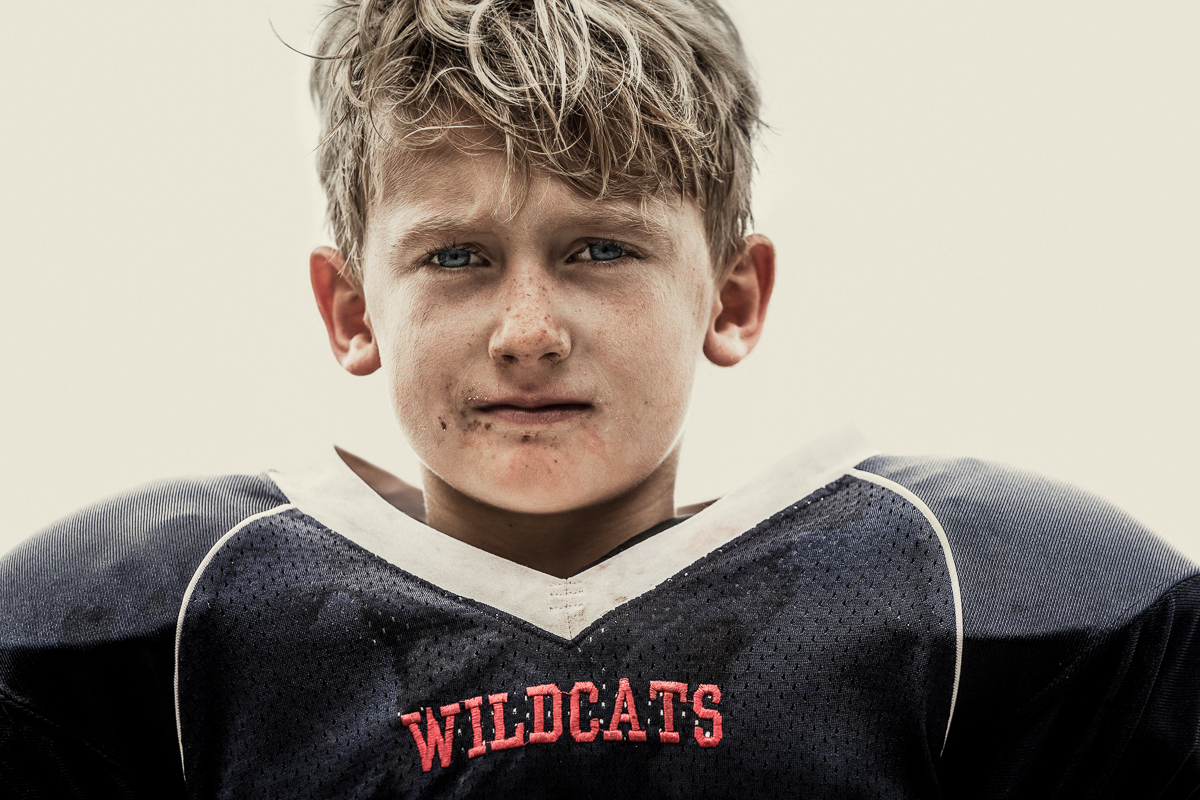
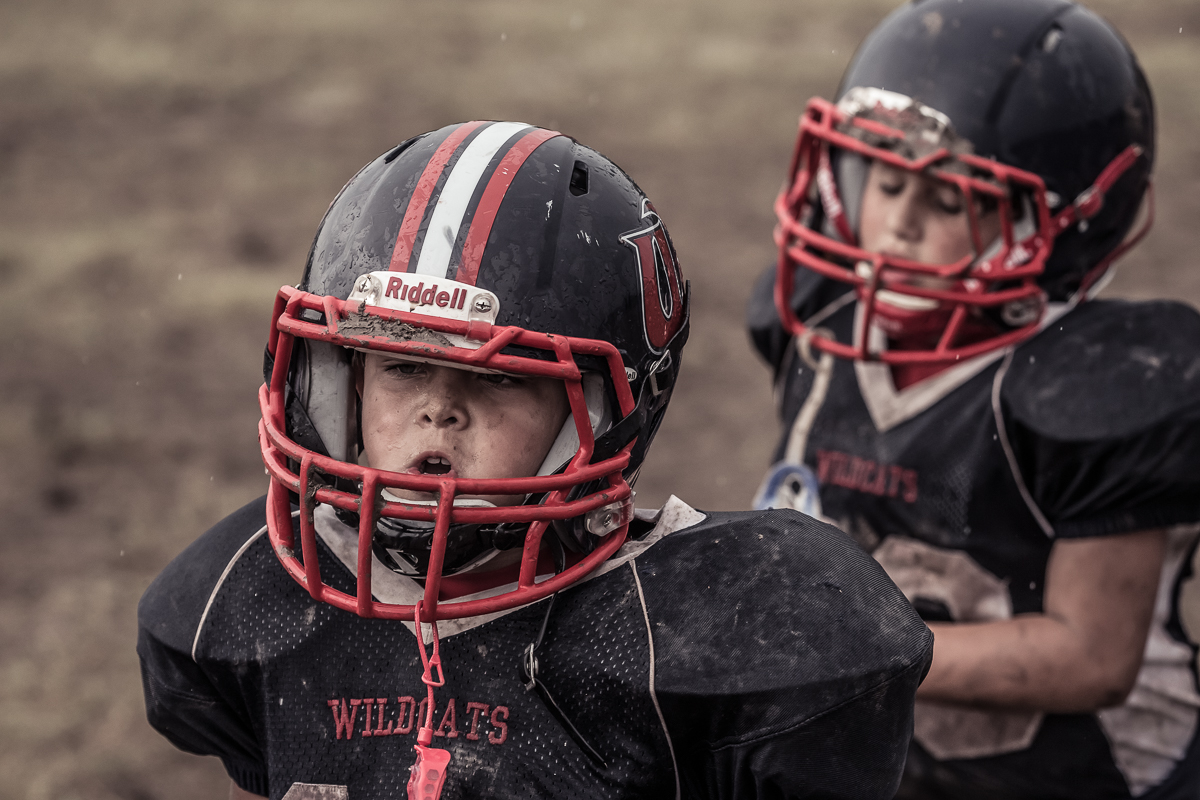
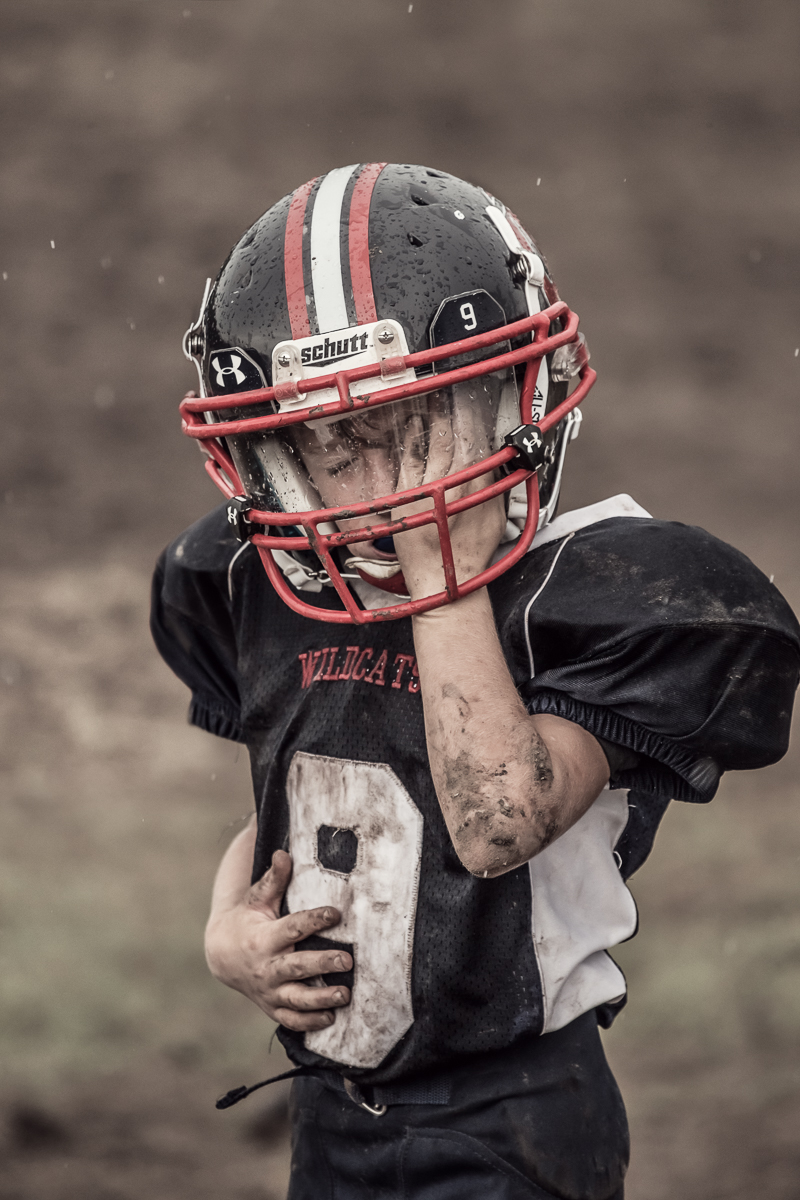
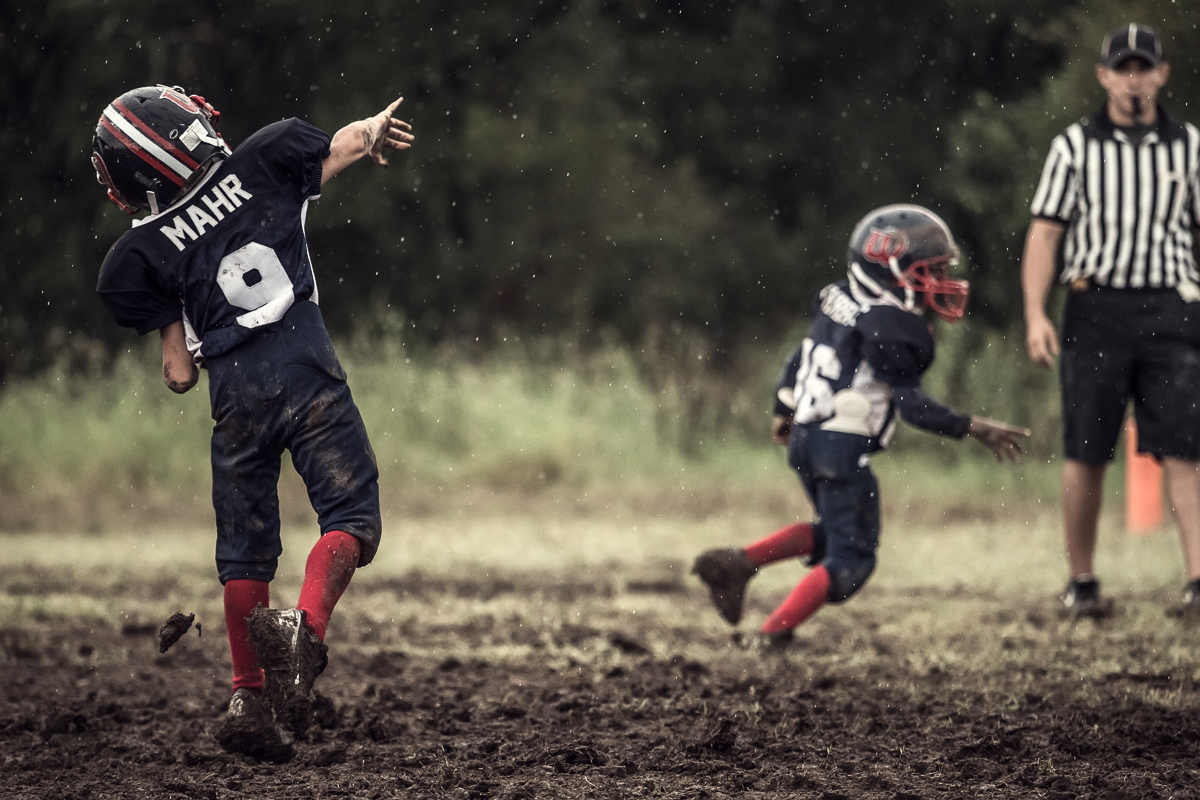
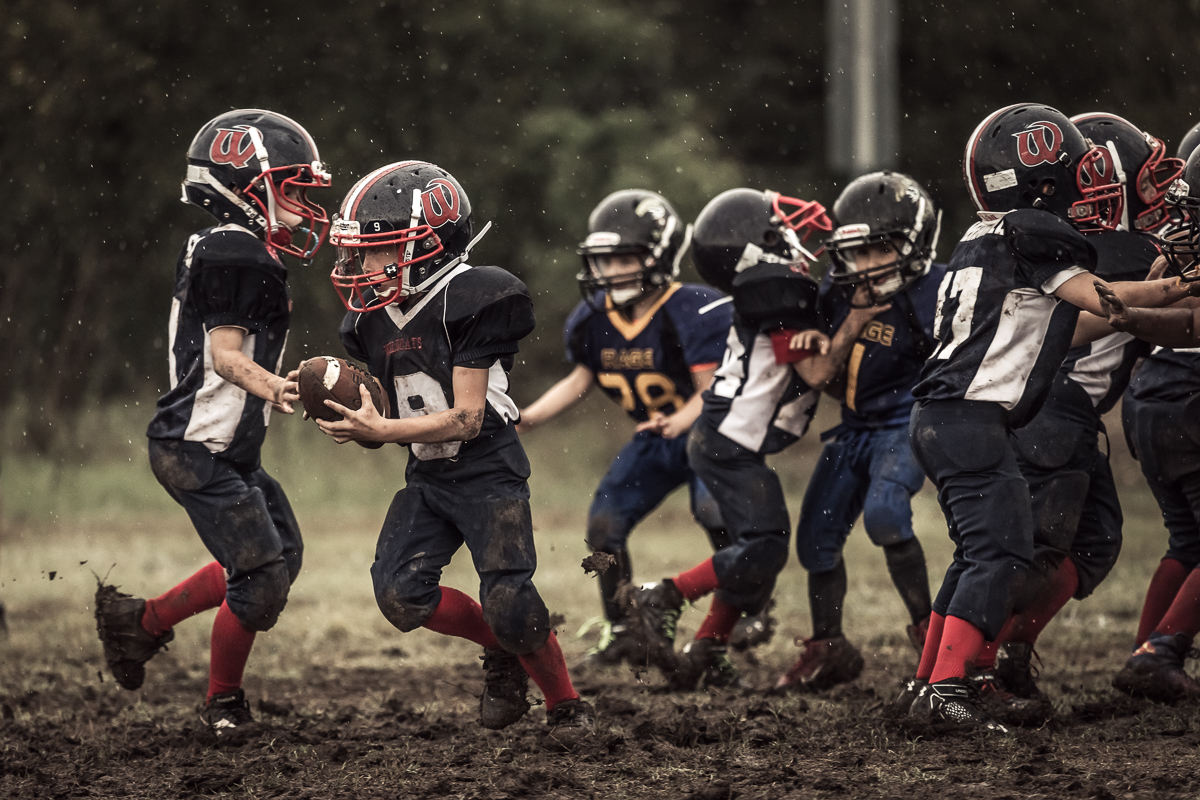
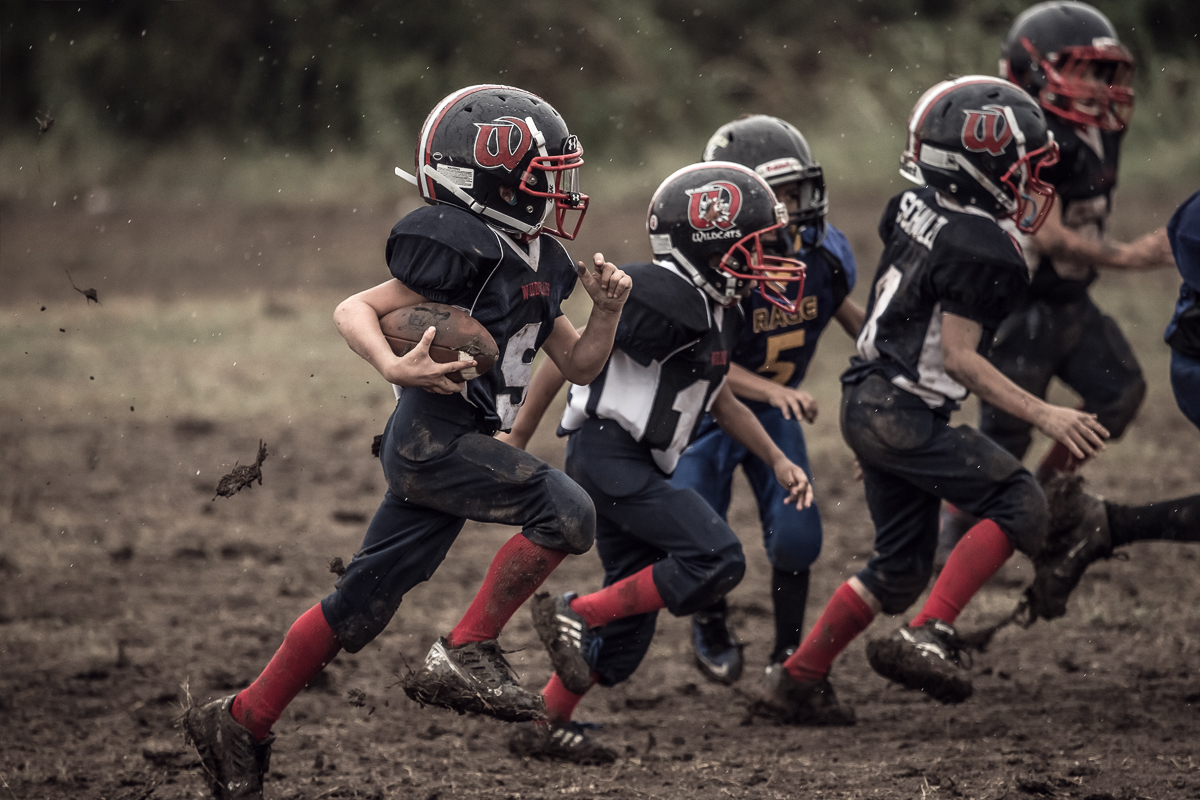
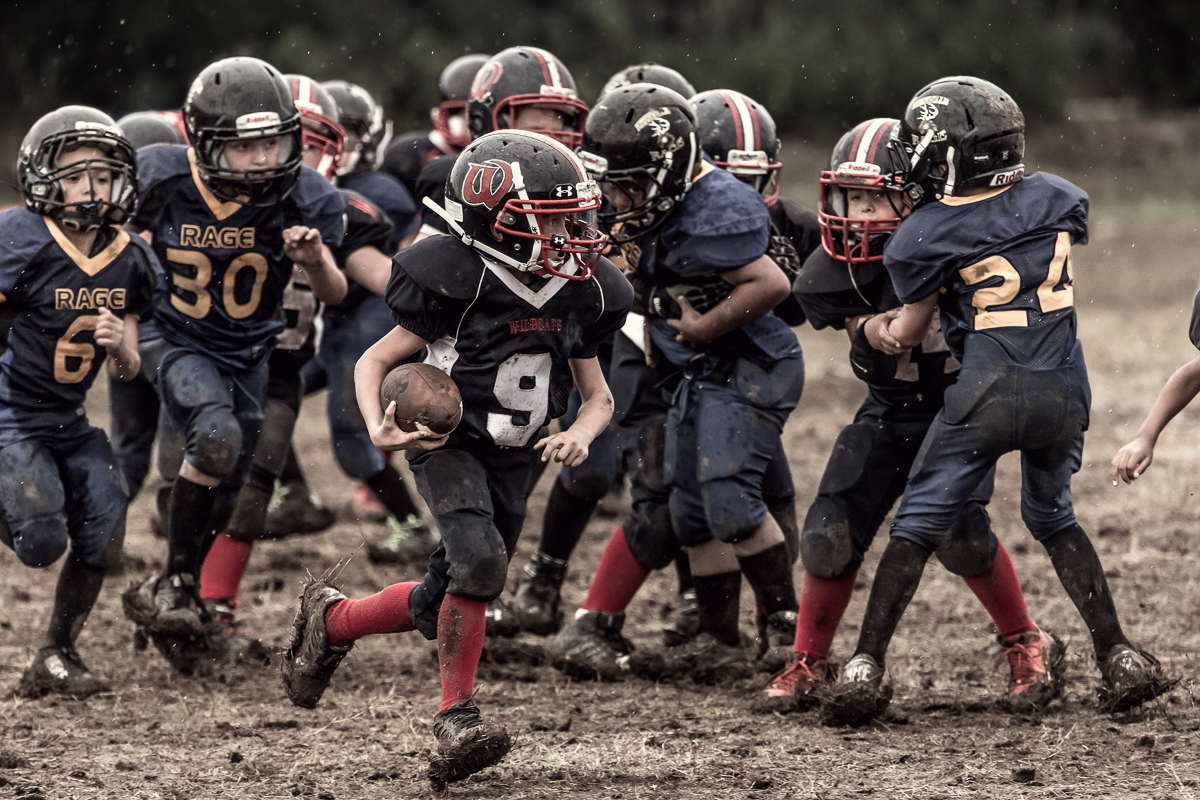
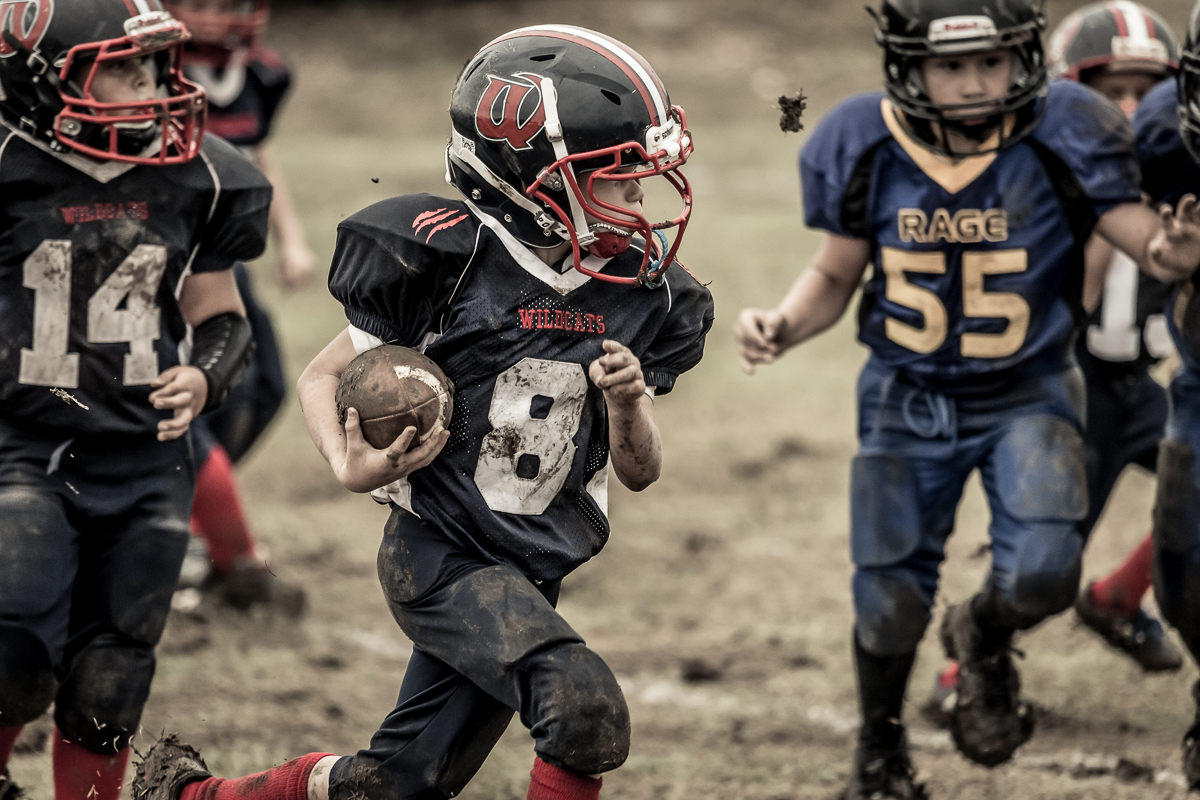
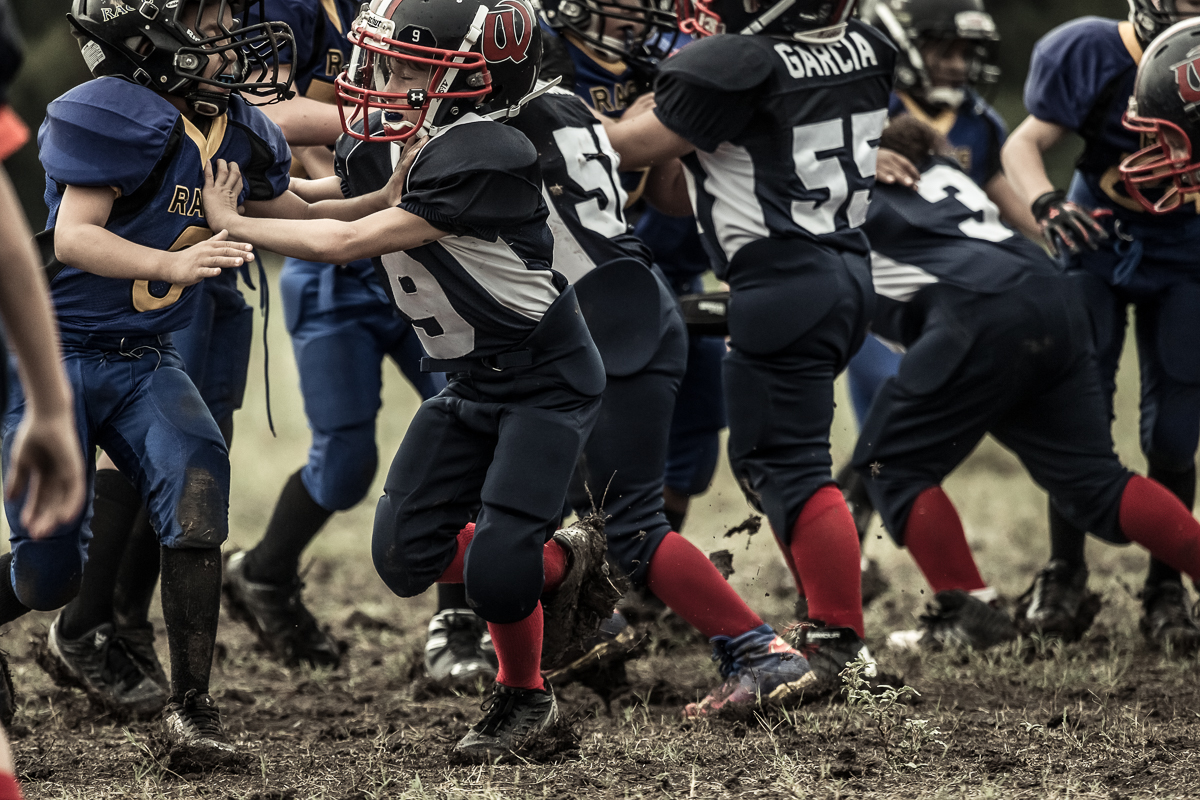
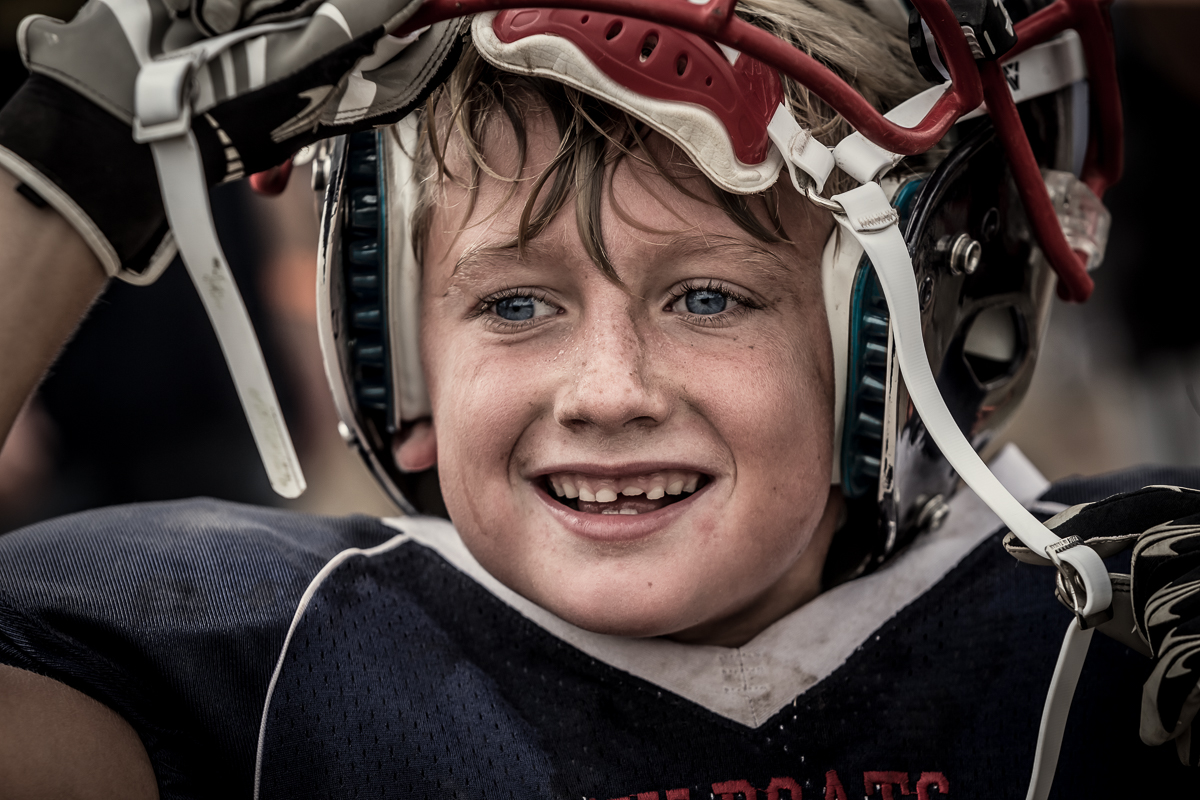
Andy Mahr photographs his son’s football team the “Wildcats” as a personal project. This is the same league as “Friday Night Tykes”, the TV series that is currently running on Esquire Magazine TV network.
Jim Fiscus is a pro at photographing characters who have sprung from other people’s imagination. He’s shot key art for series like Downton Abbey, Dexter, The Borgias, Shameless, Episodes, and Penny Dreadful, masterfully photographing the actors in costume and often on set to capture the story, emotion, and tone of each show.
But for his latest personal project, shot on location in his hometown of Athens, Georgia, Jim supplied the characters himself. For “Athens,” Jim first searched for evocative locations, studied the quality of light and the stories he could tell there, and then did a mix of street casting and enlisting friends to find people who he thought would suit the locations.
Some of the portraits, like “Kimberly” and “Gwinny,” are classic black & white character studies, but others have Southern Gothic streaks—something of an outsider quality, or maybe it’s that it feels like the rest of us are not part of this club.
Below are more portraits from Jim’s “Athens” series.
Gwinny. Photo by Jim Fiscus
Wilfong. Photo by Jim Fiscus.
Kimberly. Photo by Jim Fiscus.
Twins. Photo by Jim Fiscus.
Photo by Jim Fiscus.
Photo by Jim Fiscus.
Photo by Jim Fiscus.
To see more of Jim Fiscus’ photography, please go to his website and Altpick page.
The Urban Outfitter Kent State shirt design. It’s almost embarrassing to talk about it. On the one hand, what power could a shirt design have? Shirt designs come and go in seasons, like everything fashionable. New ones pour out of department stores daily. What could have caused one shirt design to get so much flak?
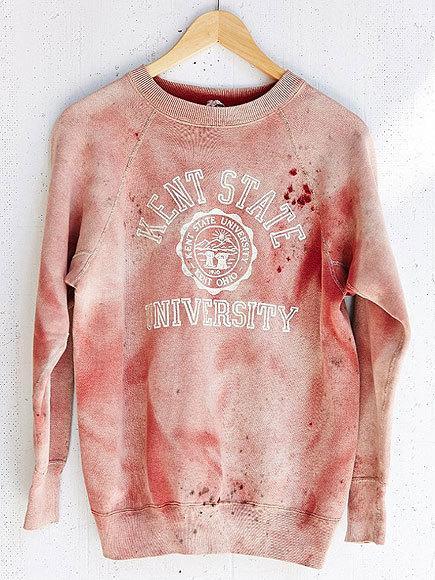
Last week, Urban Outfitters released a shirt that became almost immediately controversial, and not in a good way. The shirt has the Kent State University logo on it, under what seems to be a lot of blood staining. Responding rapidly to criticism of the design, Urban Outfitters went on record saying what looked like blood stains were really just a “vintage” look but then proceeded to take the shirt down from their website, not wanting to further offend.
No one so far has taken the “credit” for designing this shirt, but of course, no matter how this happened, the final responsibility fell on the company for offering it in the first place, and once it became clear to them it was “unfortunate”, they handled it well. They don’t seem to be uncomfortable with controversy.
The Unfortunate Reality of Kent State
Four unarmed kids were shot by the National Guard at Kent State University in Ohio in 1970, during a protest related to the Vietnam war. I was a freshman in high school then, but at 15, my friends and I were aware four kids around our own age were killed for disagreeing with the government. It was reported that the National Guard fired 67 rounds over 13 seconds. Some time after this, I participated with other kids from my high school in our own demonstration, complete with homemade posters calling for the safety of free speech. We were pretty young, but we knew it wasn’t okay to shoot someone for speaking their mind and certainly not a kid in school. At the time, I didn’t completely understand the imbalance that government was heading towards, towards the extreme imbalance we are experiencing today where our freedom of press and freedom of speech are entirely compromised. And at the time, I didn’t imagine the role that powerful, meaningful graphics in popular culture could play in influencing a population – except that my participation that day in school was prompted by well-designed and well-written articles, graphics, and even a song that spread like wildfire across the US. Ultimately, graphic design and the young, fashionable, hip media of the day, made what happened at Kent State relevant to kids like me.
Social relevance for sale
No matter what was behind the making of the Kent State shirt, there had to be a few hoped-for responses from the potential consumer: Do you wear the shirt with pride because people died that day and you want to remember them? Seems unlikely given an audience of buyers who may have no clue about what really happened at the Kent State killings. Do you wear it because it looks like something dangerous happened there and you want to appear “dangerous” too? Possibly. Or maybe “social relevance” is just the latest sales tool* Gasp. So terribly un-PC: “This is such a cool shirt, and didn’t something bad happen at Kent State once?…that would be a great selling point etc etc“… Perhaps they thought it would be part of a “Protest Wear” line; cashing in on the ever growing discontent of people around the country complaining about censorship and control. Except that innocent people died at Kent State at the hands of the National Guard, they might have imagined it would represent a sweet memory in our collective consciousness: a time when youth stood up for something they believed in.
It’s not that a corporate entity got “caught” while it slept through history, or created something that embarrassed them and had to take it off the market that matters to me. That kind of thing happens more regularly than anyone would want to admit. The reality that it could happen at all – even looking at all possible, plausible, excusable reasons squarely in the eye – is a sure sign we have become pretty irresponsible with our message-making.
Meaningful graphic design is still a dangerous idea…
In 1989, too long ago for many young designers to remember, an AIGA conference took place called “Dangerous Ideas” where Tibor Kalman and Stuart Ewen** asked if graphic design had simply become a tool of corporatism. Tibor annoyed a lot of wealthy, celebrity designers in the audience as he accused them of having no conscience while doing highly visible, professionally celebrated and well paid work for ultimately abusive companies, and his presentation was unforgettable. It caused quite a buzz around the coffee breaks and prompted a public debate later that day between Kalman and Joe Duffy, becoming quite the spectacle in an impromptu battle of wits. I appreciated the exchange, but it all seemed hypocritical to me. If design was portrayed as a ladder to fame, fortune or status, the designer needed to play by the rules, even if he/she was able to bend them a little, like Kalman did. By 1989, we all knew that design was compromised as a tool for social reform, and there was little anyone could do to change that, if designers wanted to keep the cash coming. It’s a bargain designers make with the devil: use your talents and mind for the corporate ideal and keep your opinions and ideas to yourself.
And yet, I remain hopeful…
Urban Outfitters has safely, and smartly ended the discourse over this shirt. On to the next concept. But the shirt did not go entirely unnoticed by the public, which is a really good sign. Many believed it trivialized police brutality, not to mention death, protest and free speech. Some folks know what happens from experience, when peaceful protest is met by the “authorities” and we still don’t want to be killed, imprisoned or blacklisted for disagreeing with our government. Perhaps this is even more meaningful today than ever, in the wake of a militarized police force and the ever-growing power of the NSA.
If we believe that graphic design has nothing to do with how we view or remember experience, this is our wake up call. Graphic design remains a powerful tool of our corporate culture, often used against us, rarely used for real education or enlightenment. If we as designers have relinquished our potential influence in order to climb the corporate ladder or feel good about being “artists”, it’s completely understandable, but does this also give us permission to be irresponsible with the messages we share?
We can’t disregard the kind of power and persuasion that intelligent, informed visual communication can make in the world, even one as badly done as the Kent State shirt. Graphic design may not be able to “change the world” but it certainly can teach us what the world is about. If design is meant to transcend the trivial, we must be willing to tell the truthful stories, as unfashionable as this might be. And when you have taken the time to learn those stories yourself, you will make all the difference in the world. •
* An entire discussion for another blog!
** If you don’t know who these guys are, just look ‘em up.
Pertinent links: Click here to read more on Clare Ultimo’s Blog. Read more about Urban Outfitters’ Bloody Kent State Shirt on The Daily Beast.
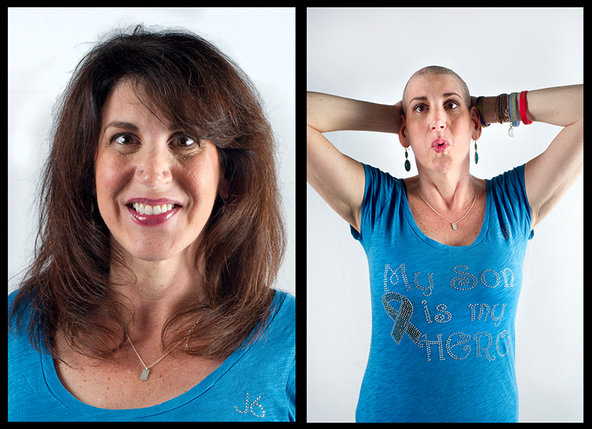
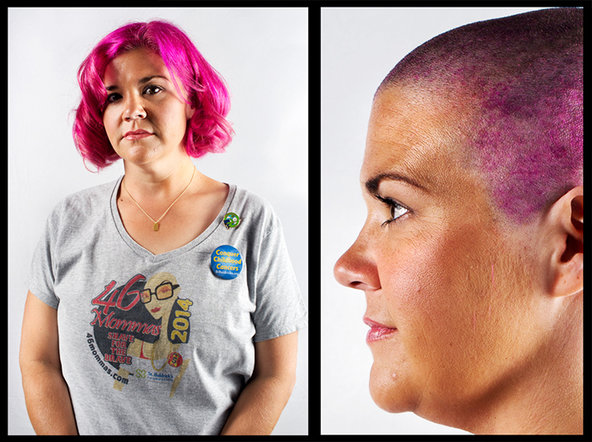
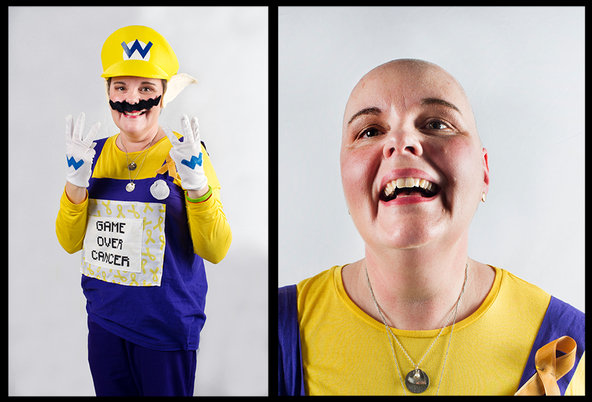
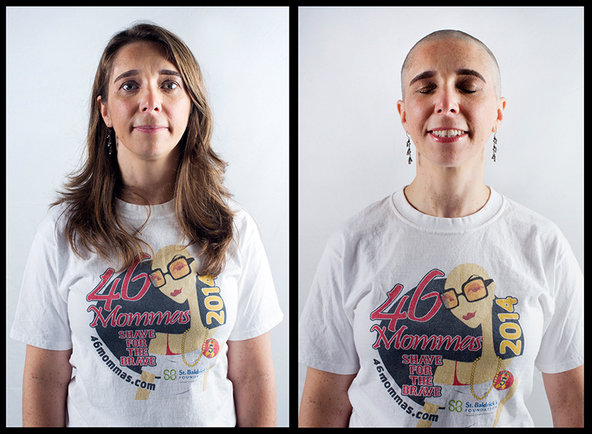
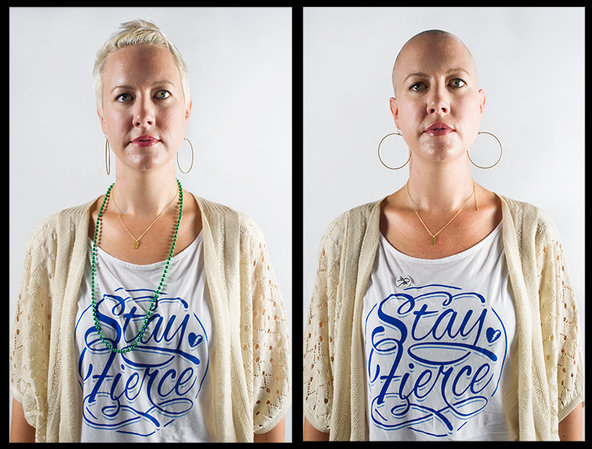
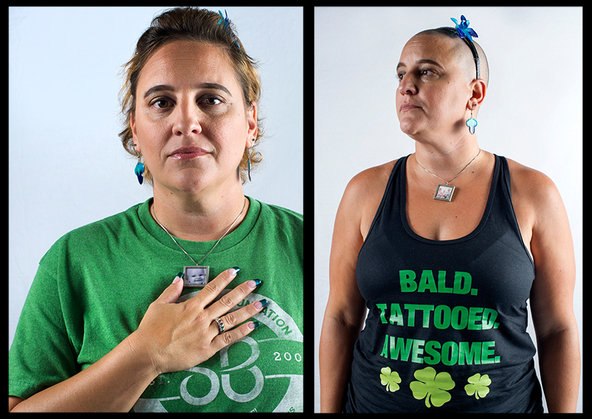
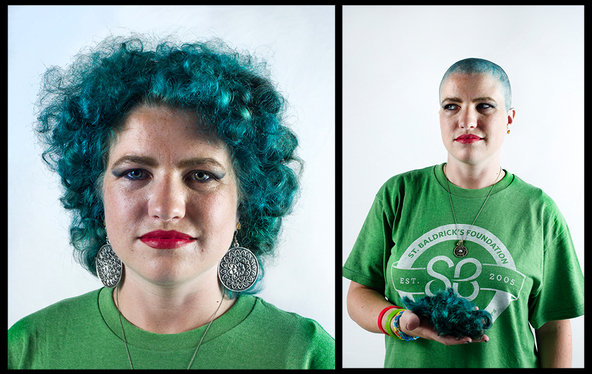
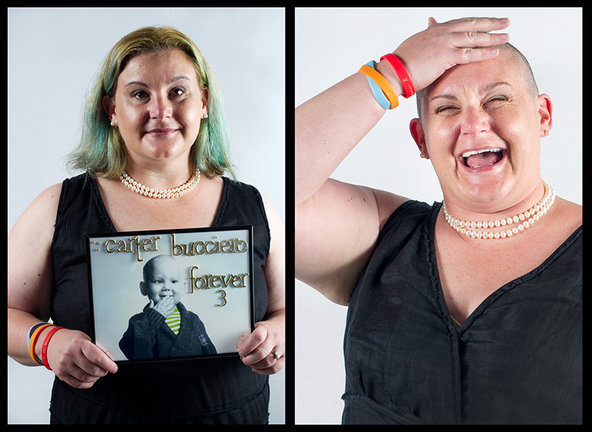
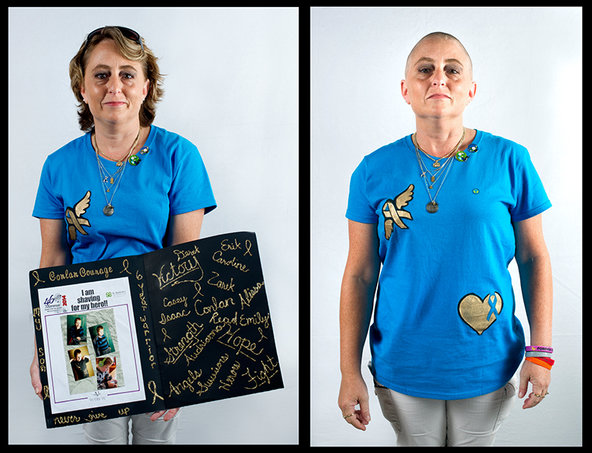
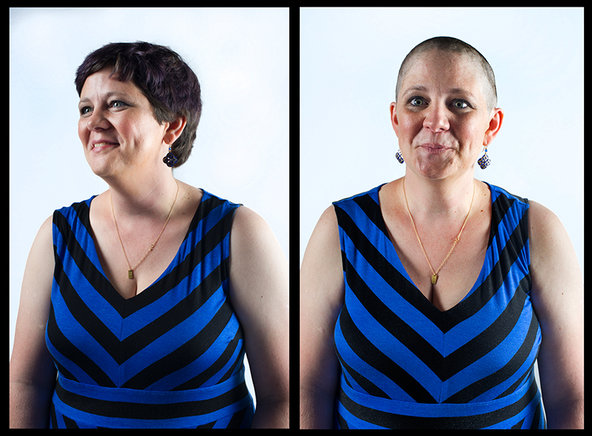
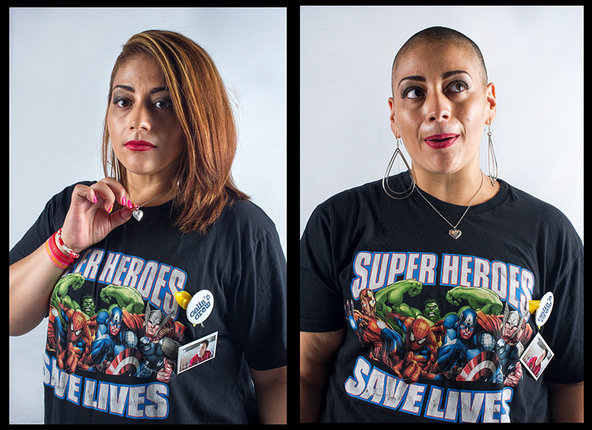
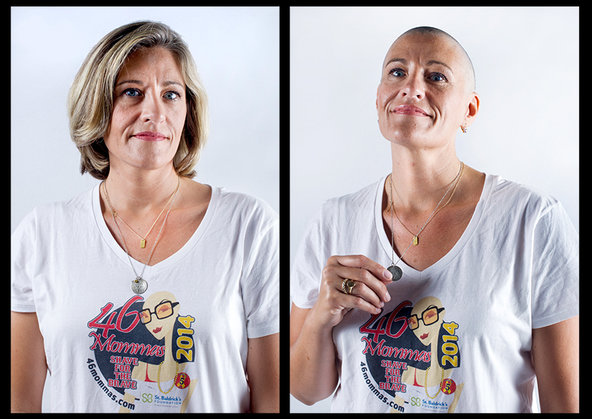
A mother stands in front of my camera. “I don’t know what I’m supposed to do,” she says anxiously, so she smiles stiffly, as you might in a school picture. “Just be yourself,” I encourage. When she leaves my makeshift studio, set up at the Prudential Center in Boston for the occasion, I feel I’ve failed. The images reveal nothing about how she was feeling. Instead, I’ve taken a smiling portrait of a woman with no indication that she was about to undergo a serious, emotional transformation.
On Monday this mother will return home, where she will stand out in her office, at her local restaurant, at her kid’s playground, as “the bald mom.” Wherever she comes from, that will take some nerve. And it will, by design, inspire questions.
Each weekday, an average of 46 American families receive the unenviable news that their child has some form of cancer. At this event, part of the fifth annual Shave for the Brave Campaign organized by the St. Baldrick’s Foundation, mothers of children affected by cancer shaved their heads in solidarity with their children to help raise awareness and funds for pediatric cancer research as part of the 46Mommas team.
I’m often awed by personal projects my advertising photographer peers shoot. I’ve seen fashion shooters display documentary images shot in Nicaragua, still life guys shoot action and sports at the Olympics…And often, I’m more enamored by their personal work.
Being an advertising photographer has been a wonderful journey for me throughout the years. I’ve been fortunate to travel around the world and meet some interesting people along the way.
I’ve been producing personal work since the beginning of my career. It’s especially rewarding to have the opportunity to produce images with my vision and the support of a great benefactor or client.
I’ve been a scuba diver, lifeguard, lover of swimming pools and the water ever since I can remember. I also love a good challenge and often, I’m the guy the agency calls when there’s a challenge that needs a creative approach and solution due to a difficult environment, logistics or tight budget.
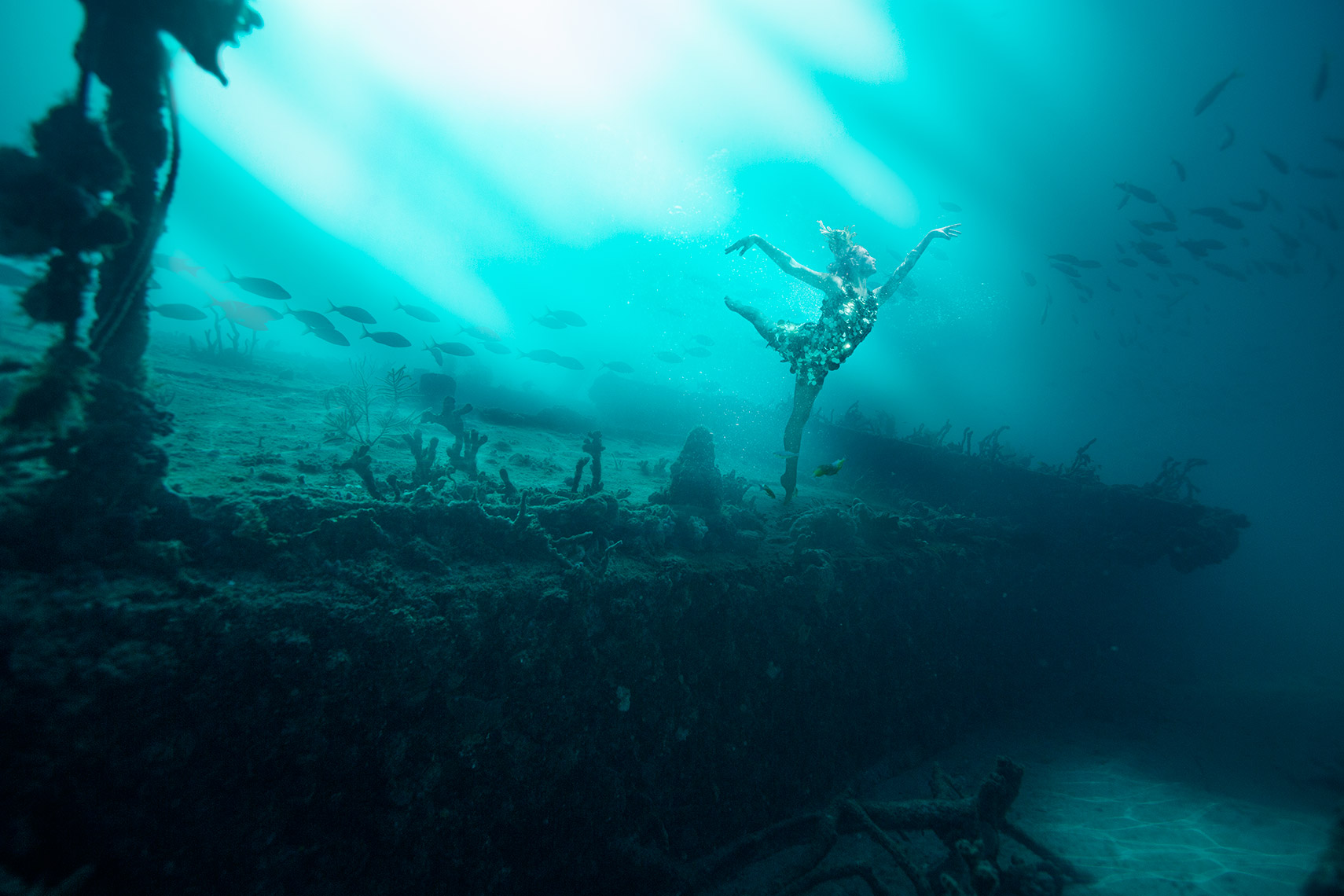
A year or so ago, I came up with the idea to shoot some underwater imagery. Not of fish and coral, but of people, playing sports, fashion, or dancing. I hadn’t yet decided what the final scenarios might be, first I had to do my homework.
Shooting stills underwater sounds easy. Grab your Go Pro, jump in the ocean or pool, and there ya go! Well, that may be true for some, I wanted to shoot a story with higher quality, more thought out, with an awe factor that would leave people asking how were these done? And, at the end of the day, I wanted to end up with a stunning and unique series of images!
I faced several challenges, most importantly; I had to come up with an idea that hadn’t been overdone. Though I love long flowy fashion, and how it looks when shot underwater, it’s been done. I wanted my shots to be more than that. I wanted the images to have an organic quality and not feel cliché’.
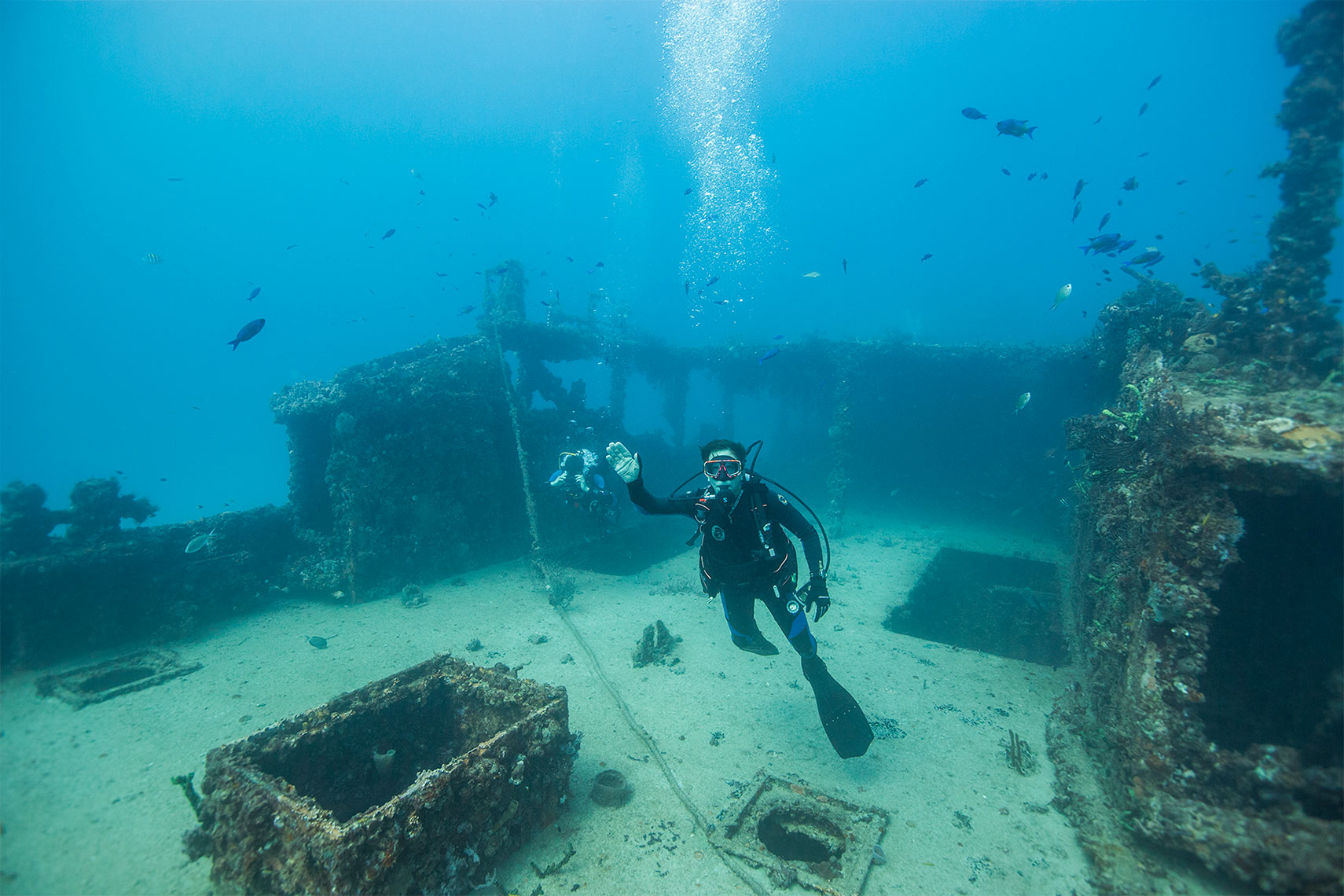
I came up with the idea to shoot underwater wrecks coupled with dancers, athletes, or to create a lifestyle situation on the wrecks with models. Once I came up with the general direction, I handled this shoot just like I do my advertising shoots. I began by doing extensive research, homework, and practice.
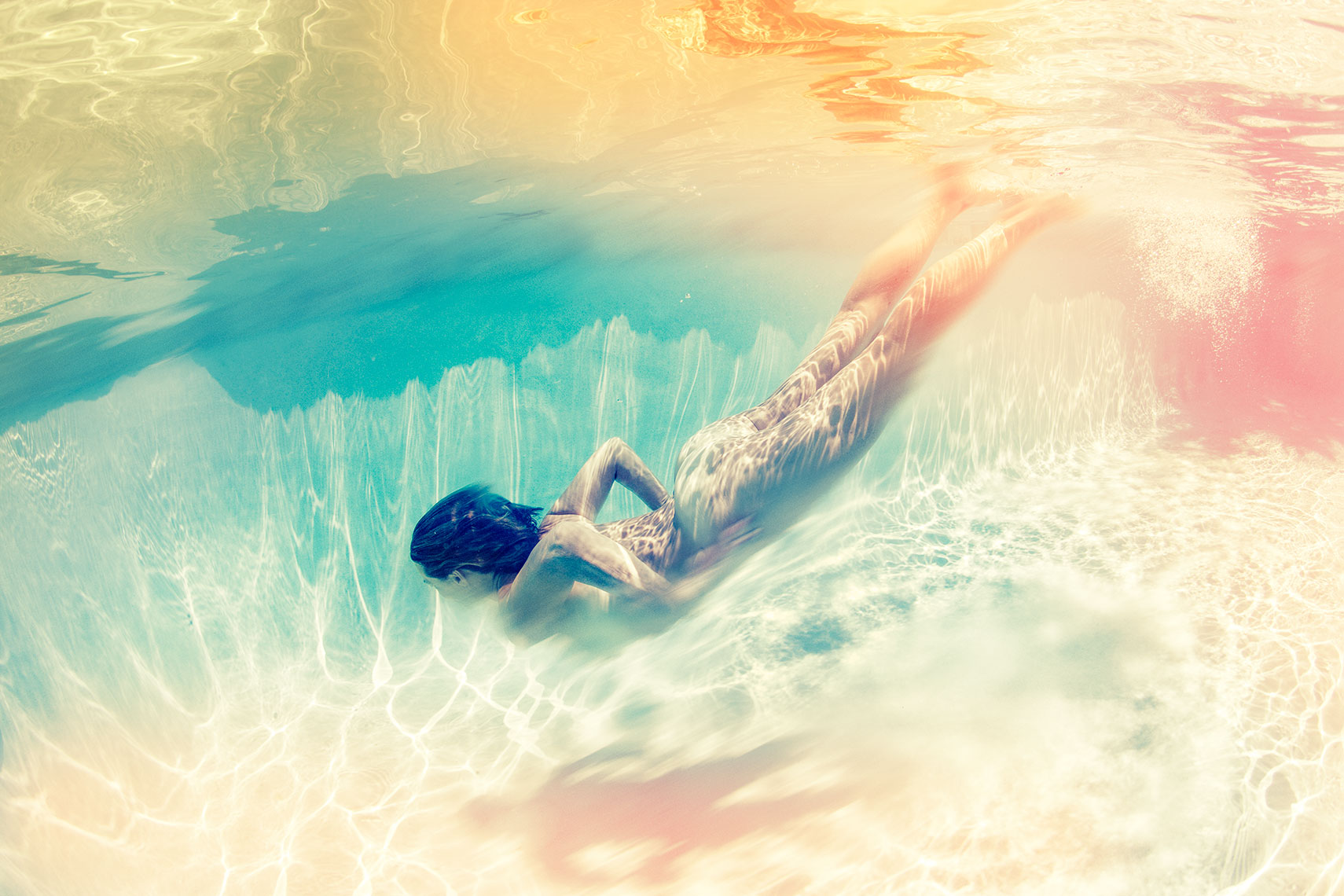
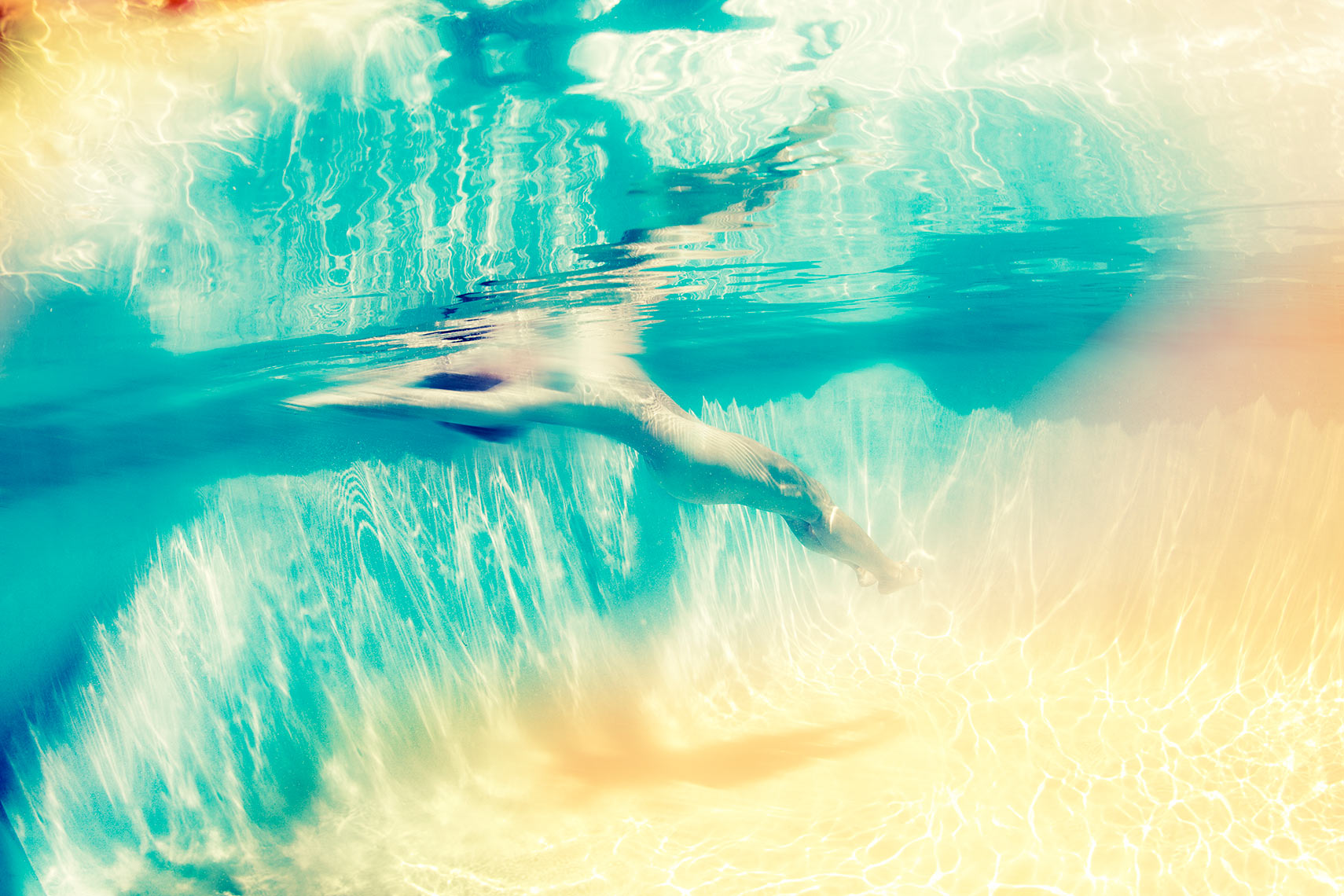
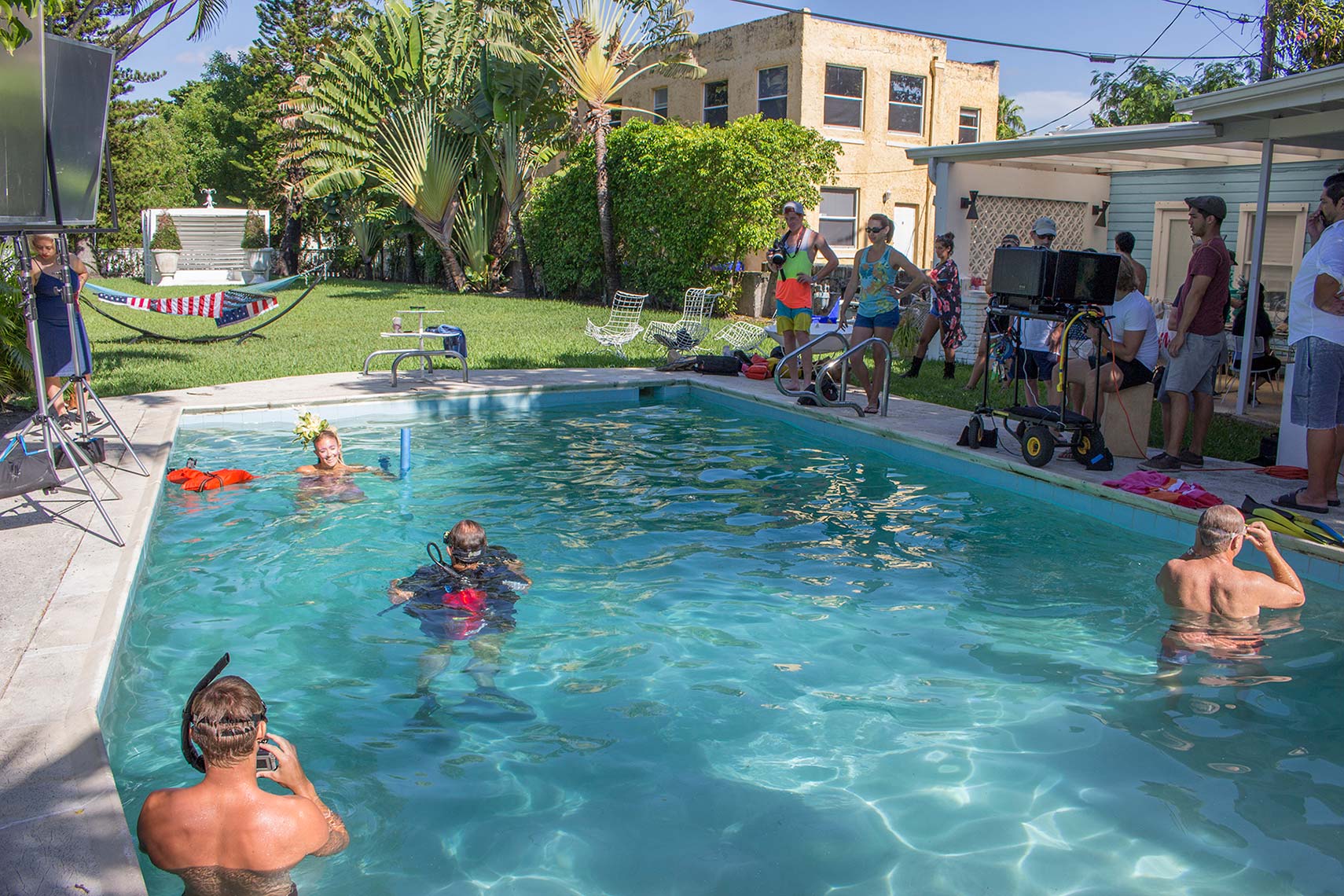
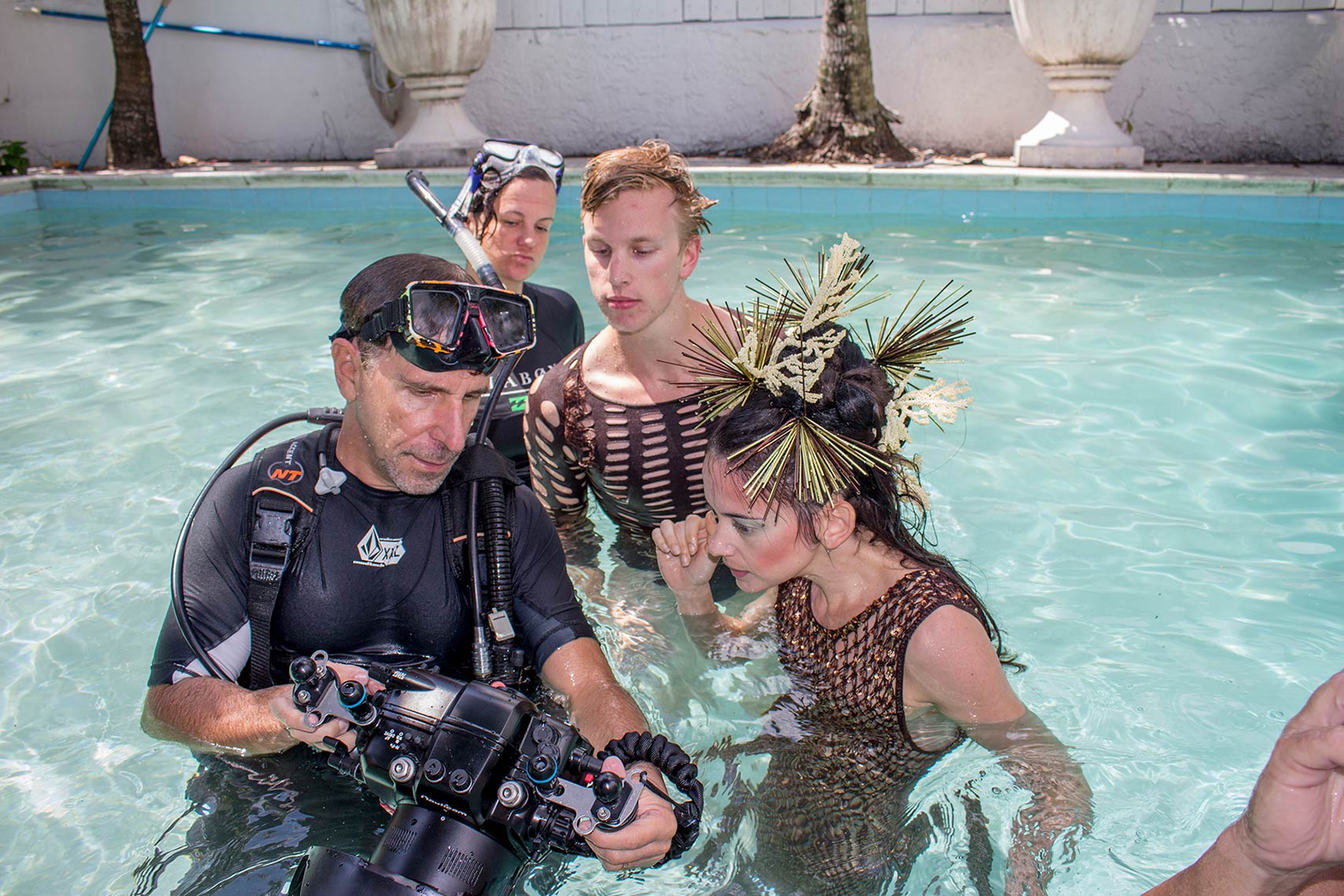
First I had to learn to shoot underwater, with and without tanks and diving gear, in a pool and in the ocean. I needed to practice in the environment with camera housings that were new to me and of course, I needed a muse that would be willing to put up with me. As I do on most of my shoots in one capacity or another, I tapped my wife to pose for me and a neighbor to allow us to shoot in their pool. Here’s a couple of my “practice shots” utilizing my wife Sherryl, my always willing muse.
Secondly, I had to come up with a way to gain access to underwater wrecks and procure the gear needed to shoot them. I also realized the wrecks were in water over 100’ deep in some instances. To prolong my dive time safely, I needed to get Nitrox certified along the way.
I wanted a great fashion stylist with access to interesting wardrobe and props. Both props and wardrobe would be subjected to saltwater or chlorine, which could potentially ruin them.
We needed great make up and hair and knew this would be a major factor to contend with, both for aesthetic and technical reasons.
Additionally, I needed talent that would be good with holding their breath, opening their eyes underwater and acting naturally while contending with being in the water for prolonged periods of time.
After a year of homework, gathering the right gear, testing in pools and the ocean, I had the opportunity I’d been looking for.
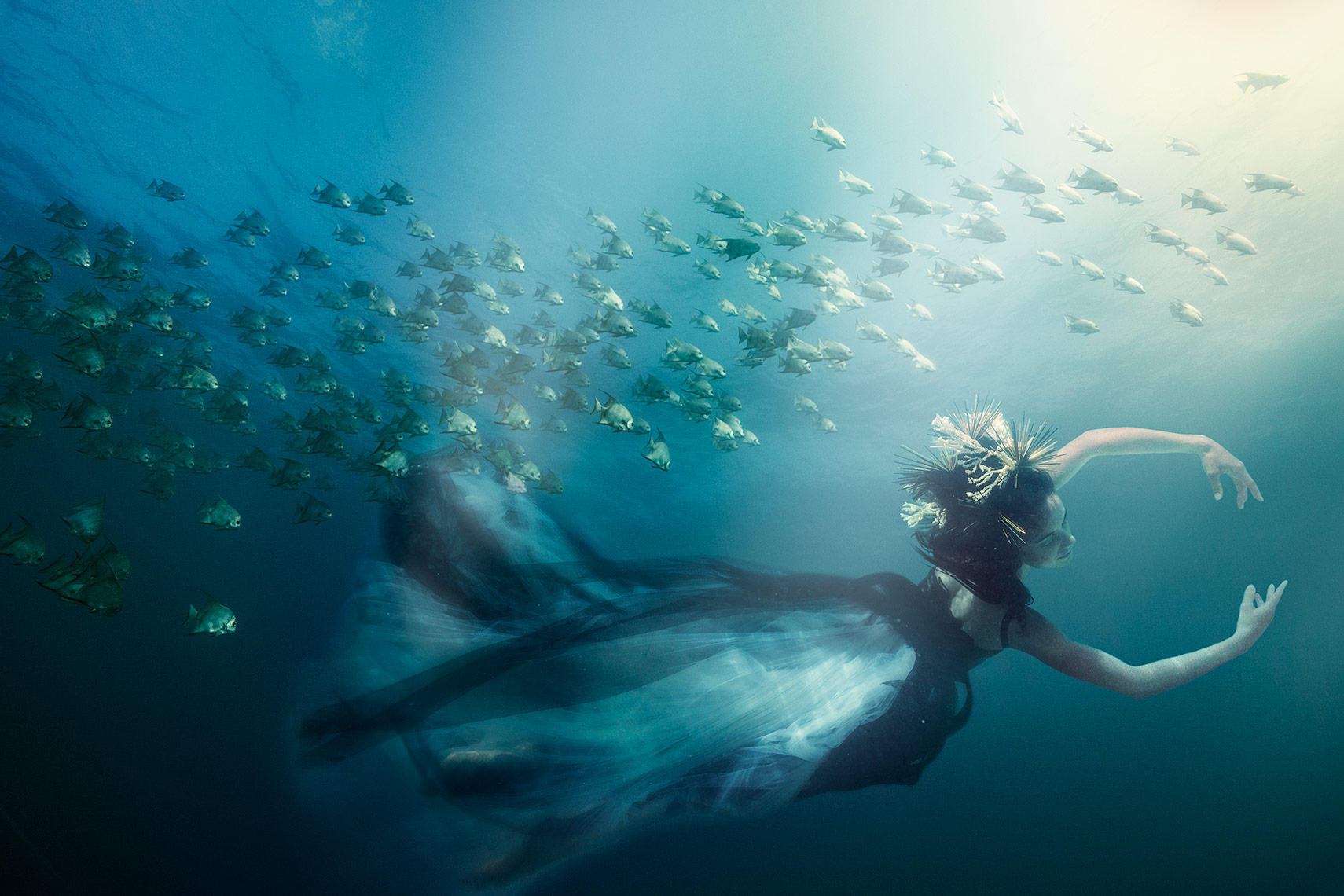
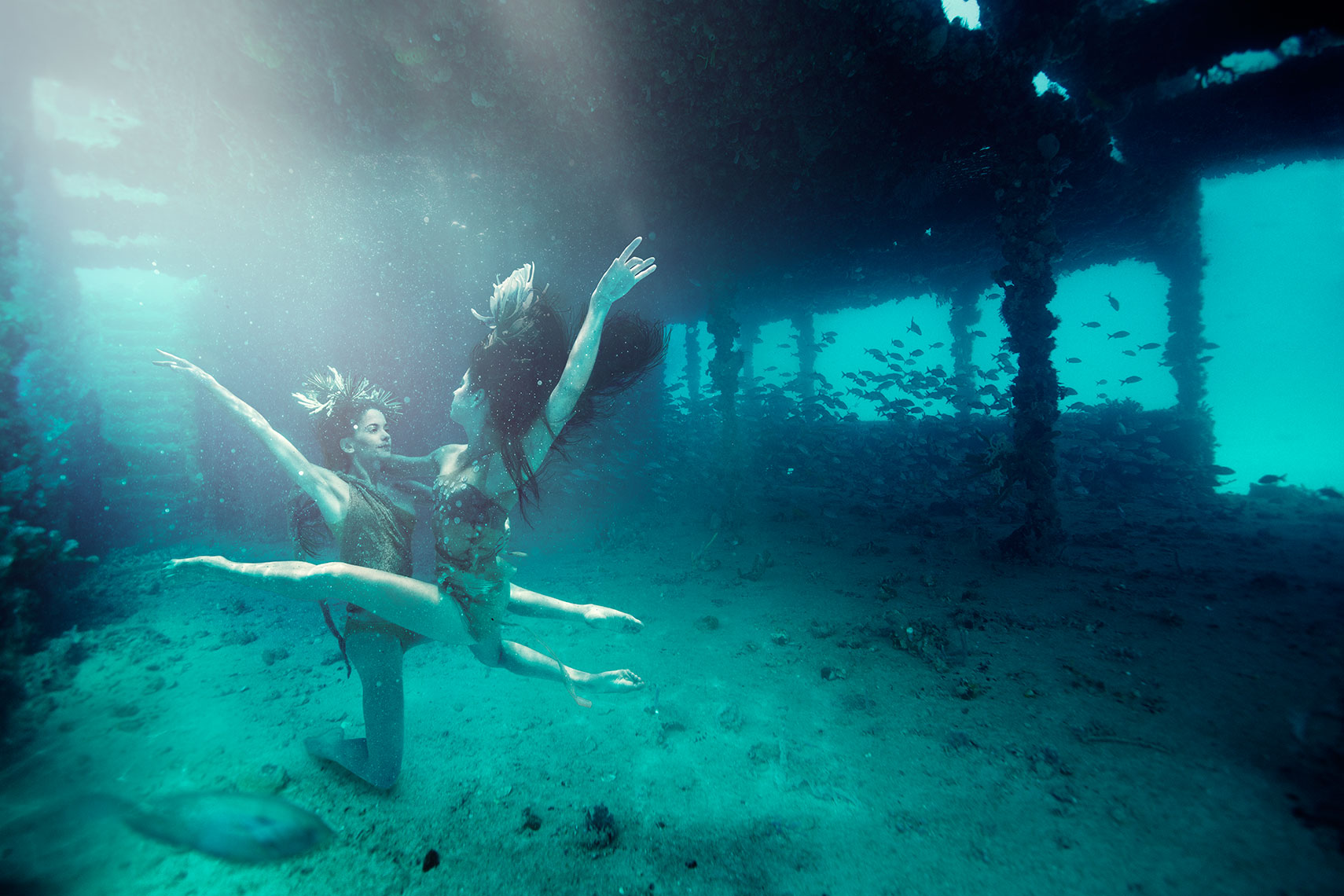
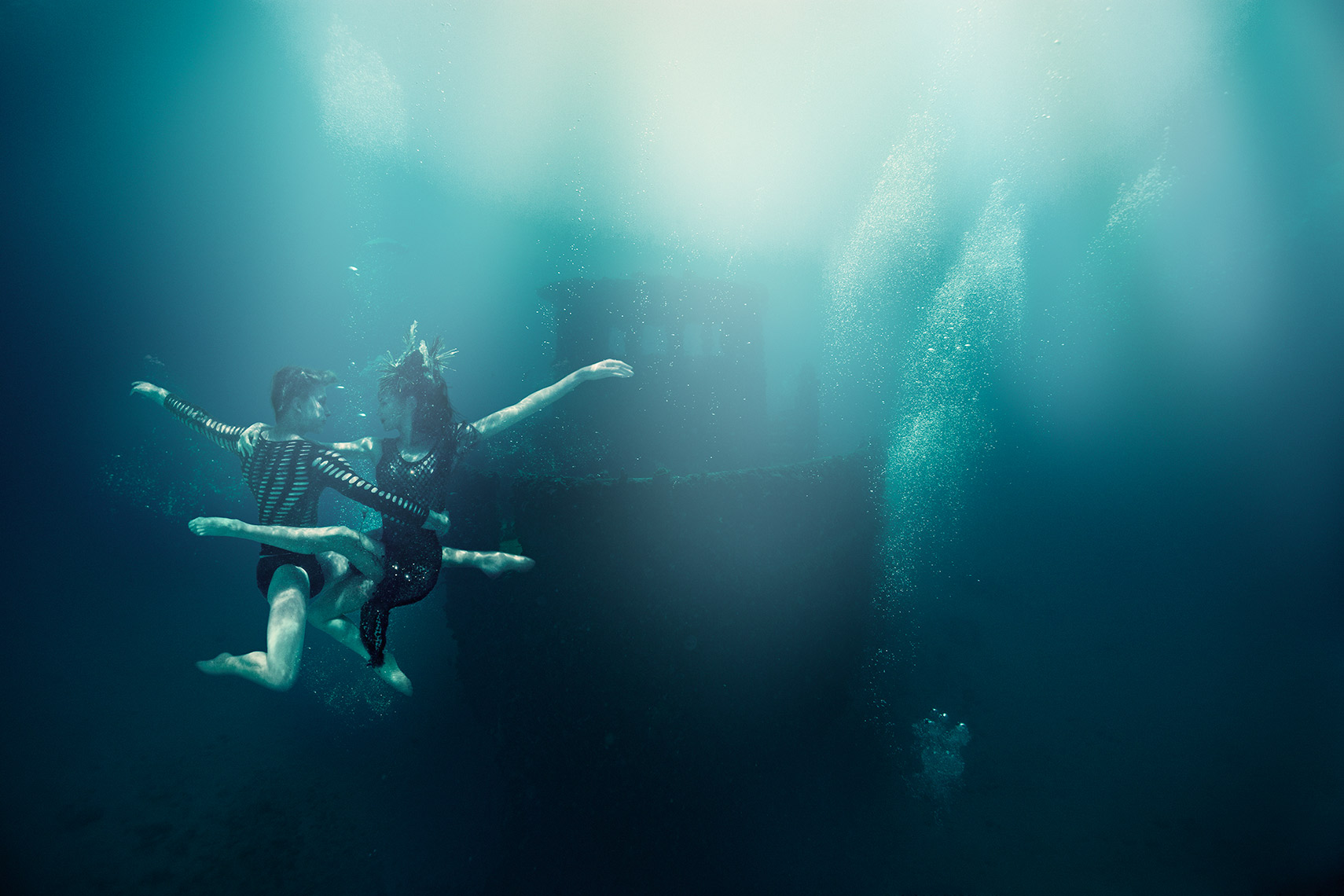
I was asked by an editorial client if I’d be interested in photographing members of the Miami City Ballet for an editorial UNDERWATER. We had talked about doing an underwater fashion story in the past, but I wanted it to be more than girls swishing around in gowns. I presented the publisher and editor with my idea and a couple of practice shots of my wife, combined with the wrecks. They loved the direction, and we were on!
I knew that the dancers could give me the right form I was looking for and that they are very disciplined with control of their bodies, but I had no idea if they could work in the water.
I followed up with them sending over a “How to Guide” to holding your breath for longer periods of time, and asked them to read up and practice.
The day of the shoot finally arrived, I had decided to shoot the wrecks prior to the dancers, keeping in mind how I would like to position the dancers in post. I decided that shooting the dancers in a pool in Miami, and editing them into the wrecks, would be the safest way of producing this. Additionally, we had a very small editorial budget to work with. Hiring all the support services I would need to get my dancers 100’ down and onto a wreck in the ocean, while safely posing, wasn’t the right approach in this instance. Even so, shooting around and under the water is not very forgiving. Every aspect has to be thought out as little mistakes can exponentially grow and become major issues.
Our shoot came of seamlessly. We used the sun as our main source throughout the day with strategically placed reflectors to maintain an organic consistent look to match what we were getting in the ocean on the wrecks.
I take my hat off to my retoucher Christine Craig, who is much more a partner in vision, than a retoucher. We’ve been working together for over five years, mostly over the shared networked internet tunnel we have created so we can each see what the other is working on in real-time. She’s lived in various locations around the northeast since she started as my intern in Miami and has since settled in SC. Christine had been excited by the idea of shooting underwater from day one. We did research and tests to come up with the best approach to match our vision. She’s the kind of girl who doesn’t give up easily and every time I challenged her, she exceeded my expectations. I’m lucky to have her and so are my clients.
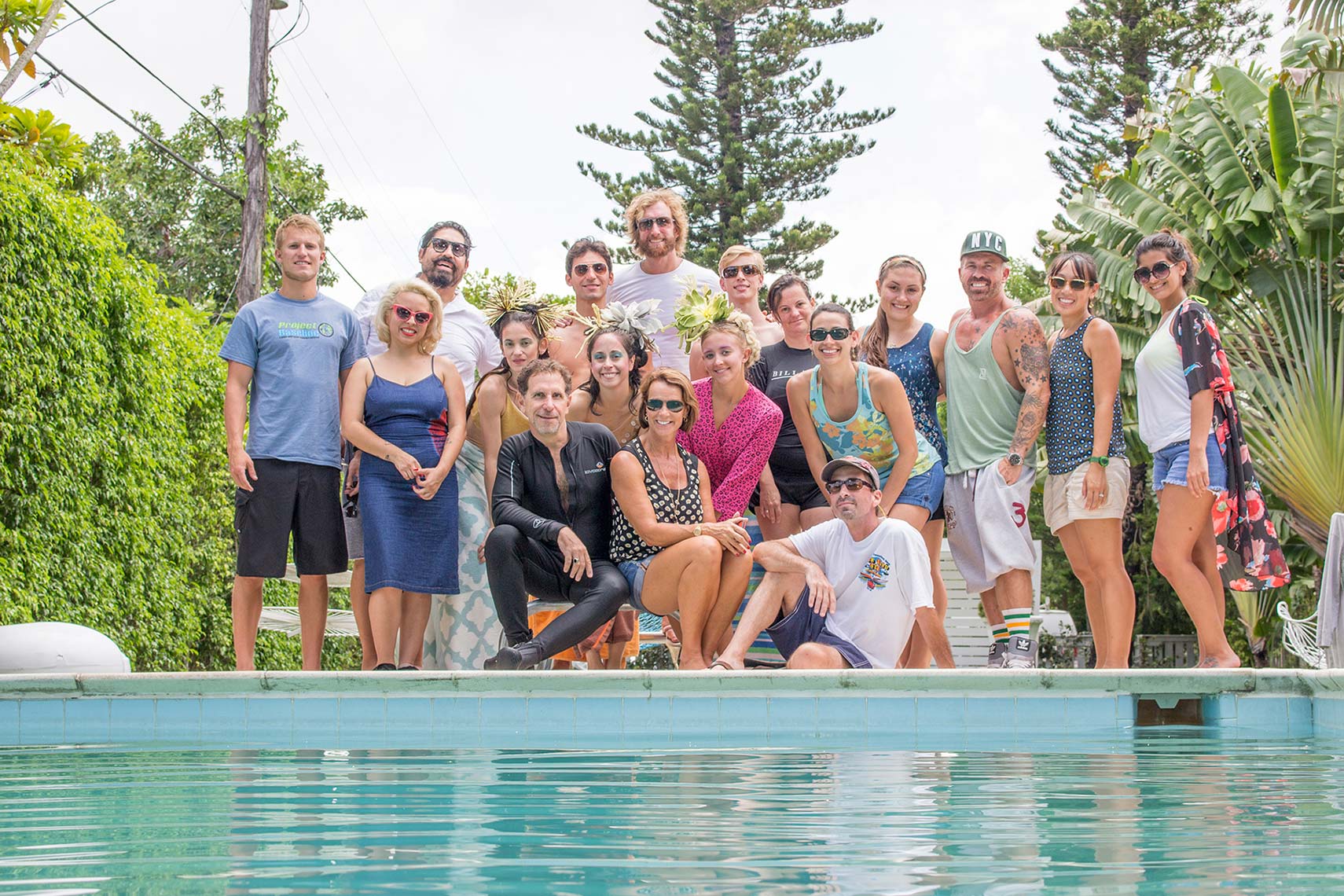
I started this as a personal project and I was fortunate to have it evolve into an editorial that came with support from the magazine and amazing talent. The editor on set was wonderful and took care of the crew, talent, and politics. The dancers were enthusiastic and very willing to jump through hoops to make this happen. My support staff worked for free or a small stipend, they believed in the idea and wanted to be part of creating some cool and unique images. I take my Hat off for all involved, Thank you!
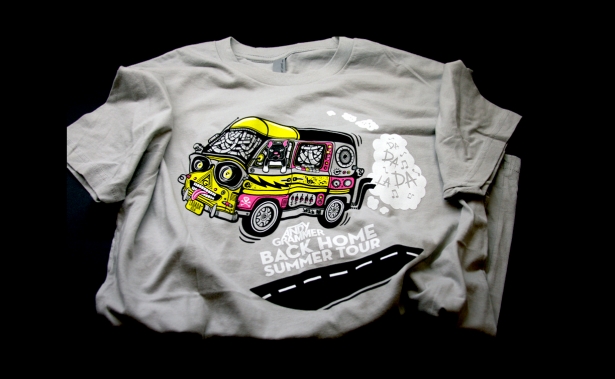
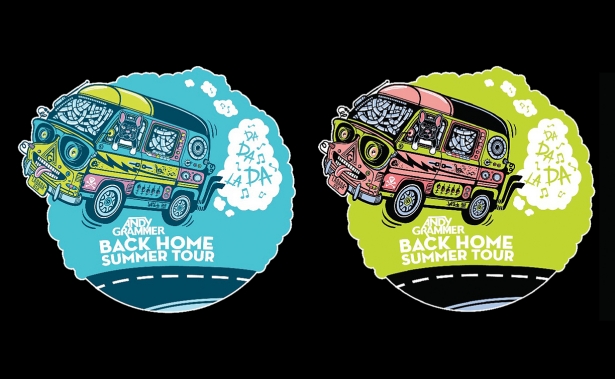
When platinum-selling recording artist Andy Grammer set out on his Back Home Summer Tour, he reached out to Miami artist John Lacko to create the graphics for promotional tees, hats and totes that are such an important part of funding any musical road trip. His management team admired the work Lacko recently completed for Diplo’s Major Lazer project and wanted to capture some of that same energy for Grammer’s promotional gear.
The design elements had to feel like home and homecoming, part of the theme of Grammer’s first single, “Back Home” [ http://tinyurl.com/nsbjo6r ] with sentimental lyrics about friendship, minivans, and the enduring nature of returning to where he started. The first video for the song includes sunny shots of friends and bandmates traveling together, playing cards and singing songs on the way to the next gig. Once Grammer reaches the stage, the audience sings and dances under clouds of colorful smoke. As the song hits its final chorus, Grammer stage dives out into the crowd.
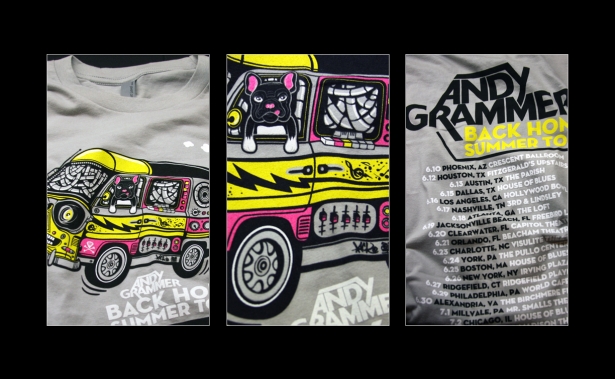
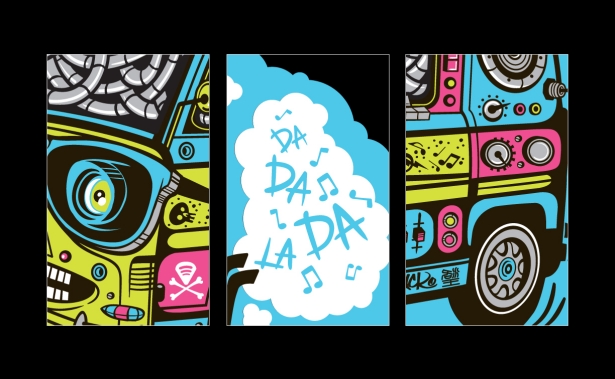
Lacko set the project in motion with a goofy band bus that’s kitted out with giant speakers, filled with miles of tangled wires and Grammer’s dog at the wheel. The van has cheap sunglasses across the headlights and a wide grin spreads along the grill. To give the sloppy jalopy added appeal, clouds of smoke belch from the twin tailpipes that billow into happy clouds of music. The van bounces across the highway making a joyful noise wherever it goes.
Neale Osborne’s latest illustrations continue his pictorial tribute to ‘The Fantastic Four’ – and, of course, their creators Stan Lee, Jack Kirby, and (fellow Birmingham-born) artist John Byrne.
Kevin Hauff had an interesting commission for the Radio Times where they needed an image for the magazine radio pages to accompany a Radio 4 drama called Psalm – about the playwright Ben Johnson.
“Rarely am I moved by the loss of a celebrity the way I am with this man. He battled demons as many creative geniuses do. He gave us all so much”, comments illustrator Phil Bliss.
When Miami artist John Lacko found himself on the receiving end of a corporate pink slip, he did what most of us do – packed up his post-its and headed for the door. After years toiling in a cubicle, he was ready to face whatever happened next with a sharpened pencil and a pretty unique online portfolio. Setting up a home art studio, he decided to embrace life as a freelance-starving-artist to see where fate (and the internet) might lead. In the months that followed, he was tasked with a number of projects from the music industry, a branding exercise for a notorious horror movie director and quite a few t-shirt designs for surf & skate companies.
He never looked back.
The economic downturn definitely took its toll on his bank account, but his stylized illustrations appeal to enough people to keep the lights on and his spirits high. “If I never see the inside of a conference room again, I’ve already won,” he laughs. “The life of a freelance artist is harrowing on a good day but at least the days are mine and the opportunity to work with a lot of very crazy people is never boring…”
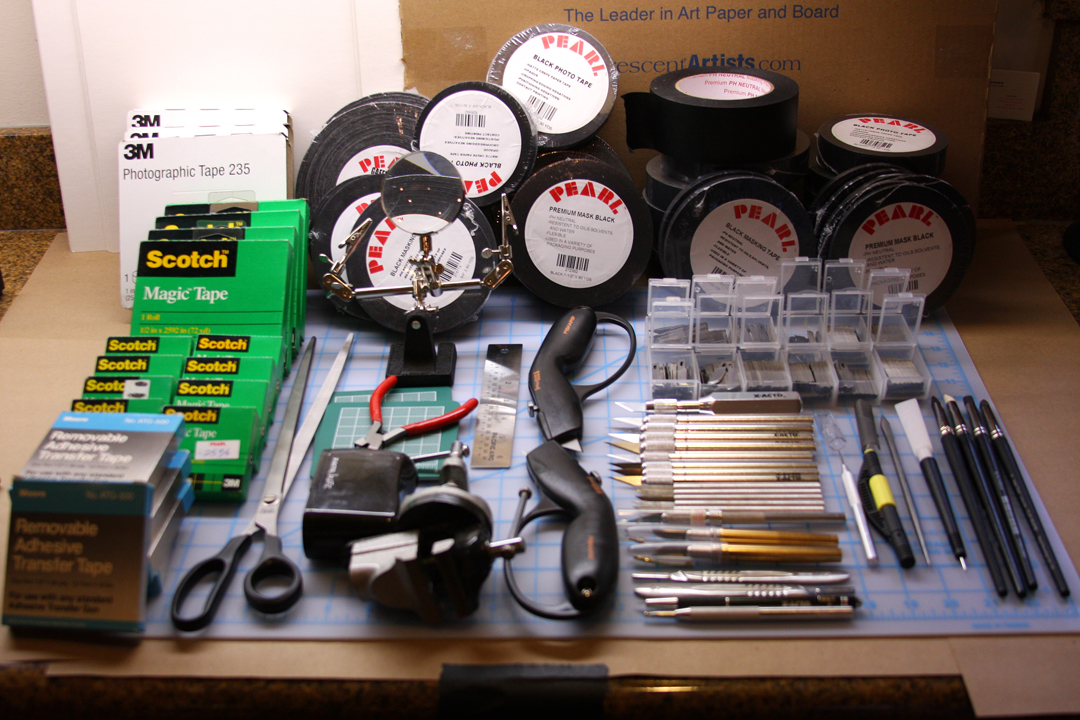
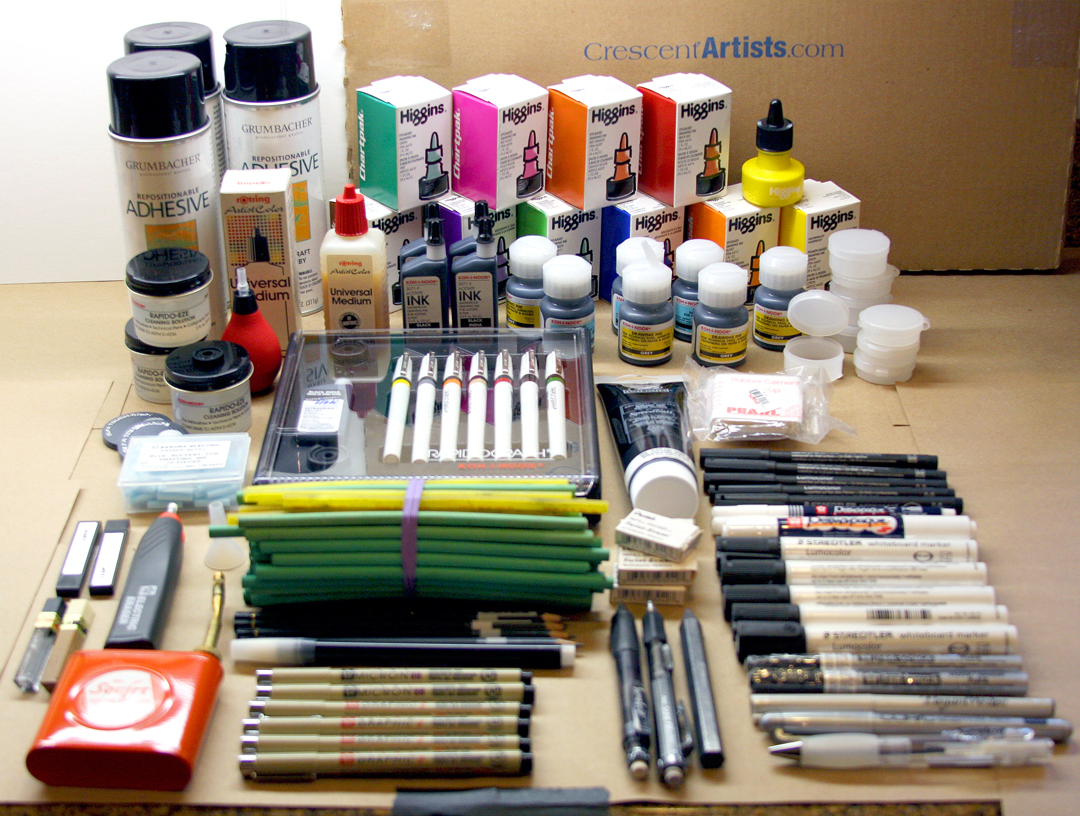
When the local news reported that art supply mecca PEARL PAINT – which is headquartered in South Florida – would be liquidating its inventory in advance of shuttering the last two stores, local artists shared their rememberances on Twitter and Facebook. The brick and mortar source of esoteric elements treasured by architects (tiny plastic people standing, walking or seated), scrapbookers (colorful scissors that scallop or zigzag edges), and embroiderers (skeins of thread in silk, cotton, wool, rayon) started out at 30%, then 40% and finally 70% off before there was nothing left to sell.
Like many, Lacko started wandering the dusty aisles trying to figure out what he needed, what he wanted and what he might require some time in the distant future. But what he found at the going out of business sale was a lot of people just like him who were facing an uncertain future when PEARL PAINT handed out their final paychecks. He started chatting with a woman named Rose, a veteran of the Oakland Park location, as she sorted through the boxes to set up the clearance tables with ten cent treasures and dollar deals.
On the first visit, at 40% off, Lacko tested the waters with a few boxes of his favorite blue pencils and then loaded up on the oddities priced under a dollar. He got tape, metal clips, a mechanical waxing machine once used for pasting up columns of printed type before computer graphics rendered the process obsolete. He had no use for an automatic waxer, but at a dollar it seemed a shame to leave it to the landfill. The store’s vast inventory of things no one seemed to need any more may have led to the closing. Selling anything online requires little more than a digital image and an e-commerce website. PEARL PAINT still had a vast and expensive portfolio department long after artists started showcasing their work on the web. The industry moved forward, PEARL did not.
When the sell-off hit 50%, Lacko found Rose stocking the aisles. She smiled less and seemed overwhelmed by the frantic energy of shoppers emptying entire shelves into red carts. Stacks of stretched canvas and boxes of markers, spray adhesive and x-acto knives rattled out the door. Even at half price, many items in the PEARL inventory were barely competitive with Dick Blick and the popular online sites. Still, the ability to touch and test, to shake and rattle made the hands-on shopping experience appealing to many. The people working at the store offered great advice and many had art studios of their own.
When the staff at PEARL in Oakland Park sent out the late night tweet that Monday August 18 would start the 70% off sale, the atmosphere at the store was bedlam. A uniformed Broward County sherriff stood at the register to help keep calm and the lines to check out ran right to the back. Someone came through and bought every single paintbrush in the paint aisle, another guy gingerly loaded up all the stained glass, a man and woman filled seven carts with such fervor it seemed they were auditioning for “Supermarket Sweepstakes.”
This slideshow requires JavaScript.
The air conditioner had long since failed and the remaining PEARL staffers did their best to facilitate every transaction. Lacko finally splurged on a few big ticket items and then wandered around the aisles for the last time. The place felt a lot like his corporate job in the hours before the final closing. People seemed weary, a little frightened, but glad the chaos was finally winding down. As he pushed the wobbly shopping cart out to the car, he waved goodbye to Rose and wished her good luck. The store may be gone, but it seems like a lot of local artists will have all they need to do some amazing new work.
If they do run out of anything, new paint is just a click away.
To view John Lacko’s work, go to his website and Altpick page.
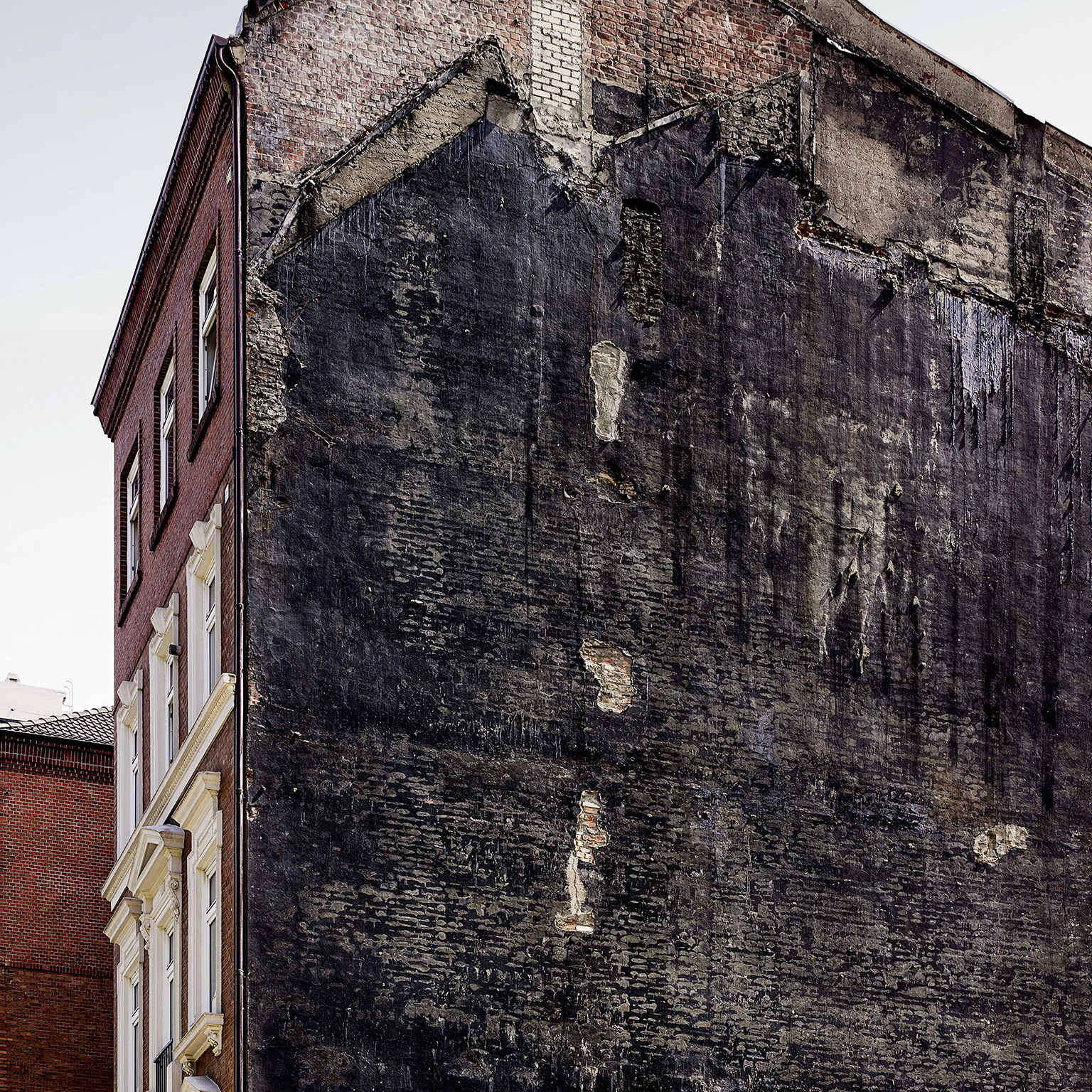
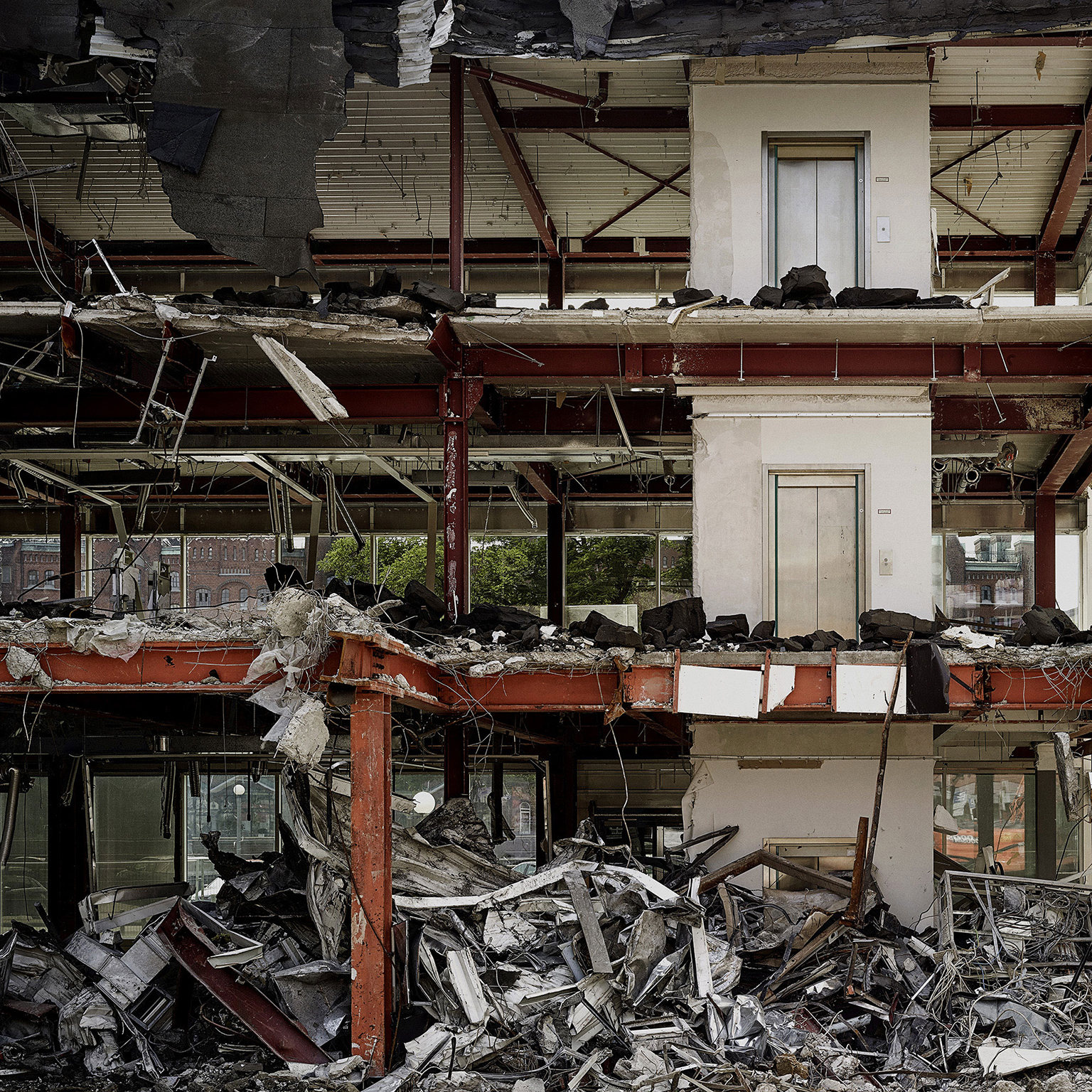
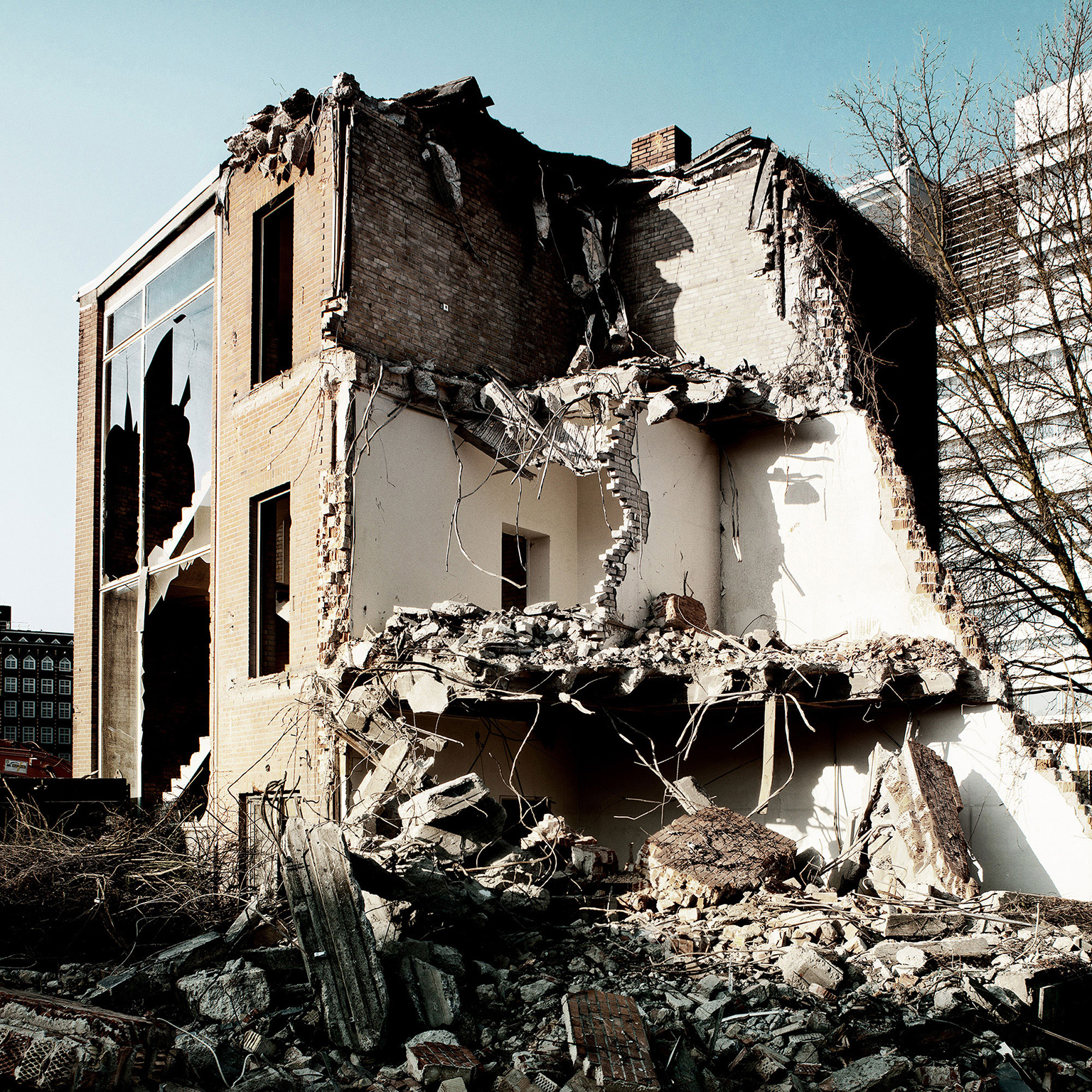
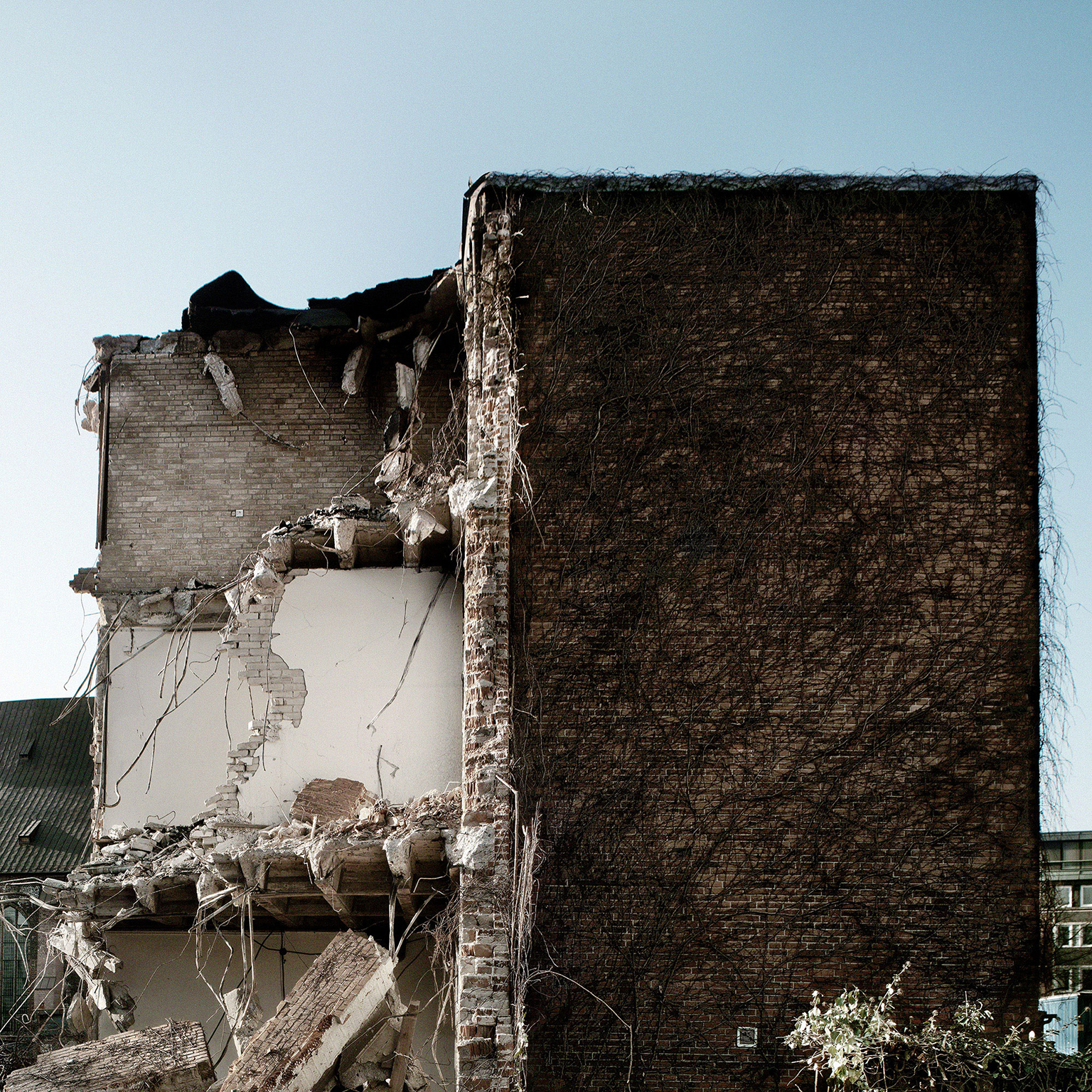
To me a building that was ripped open like the ones in my images looks wounded, lacerated, hurt, torn apart, suffering. That is what I feel when I see buildings in that very state. I prefer to still see a notion of the former inhabitants. Sinks on walls, windows, I like to be able to feel the former presence of the people that lived or worked there. I also like the graphics of open buildings. I don´t photograph ruins or buildings that have been decaying for years and years. I look for fresh, open wounds, hence the name. These buildings are hard to find because often they are gone by the time I get there with my Alpa Max Camera. And usually within a week after I shot there, they are gone for good which is another aspect I like about these photographs.
Simon Puschmann is an award-winning commercial photographer who defies all photo categories. For more than 20 years, he has been creating his own brand of dramatic, unexpected imagery for a prestigious clientele, including Audi, Citroen, BMW, BMW Sauber F1, Mercedes Benz, Doc Martens, FC St. Pauli, Lufthansa, Hamburg City Film Council, Volkswagen, and Mobil One NASCAR Racing. Among his honors are bronze and silver medals from the International Aperture Awards, 2008; first place, Altpick Award, Photography Series, 2007 and 2008; and Photography Website of the Year for 2008, by altpick.com.
Simon says:
There is no doubt. I found photography and it found me. It’s as solid a marriage as the one I have with my wife, Susanne. I bought my first medium format camera, a Hasselblad, a 503CX, in photography school in 1987, then shot only 4×5“ for years and then turned digital with a Contax 645. Now I use a Phase One DF645+ and an Alpa. I like surprising my clients, the audience, even myself. I resist being put into any photo category. Clients know they can expect the unexpected and that I try harder. I invent, love, laugh, work, live, and breathe photography.
See more of Simon Puschmann’s work go to his website and Altpick page.
























 Alex Nabaum














 The Pick